Block eight looks like the inside of a Soviet psychiatric hospital. Shokhrukh Usmonov has lived in the block apartments by the abandoned Strahov Stadium for the past year. Shokhrukh, who goes by Shok, moved from Uzbekistan to Prague to study Computer Science at the Czech Technical University, though he admits it wasn’t his first choice. Walking down the dimly lit halls of block eight, Shok recalls almost crying at the sight of his new dorm. But humans, he says, are adaptable.
Outside, Shok pulls out his phone and raps in Uzbek to one of his tracks. He asks for genuine feedback, no compliment sandwich. Uzbek is his first language, but now he’s having to partially relearn it. He only spoke Russian in his teen years and speaks a lot of English these days.
“I learned English through rap music,” he offered as a sort-of fun fact.
It was at summer camp when he was 12-years-old that Shok remembers witnessing an older kid having a rap battle in English. His young, starstruck-self berated the teenager with questions about learning English and the names of his favorite rappers. After that day, Shok dedicated much of his efforts into learning English and learning rap – now on the cusp of 21, it’s clear rap has taught him more than just how to speak English.
Without much access to the internet in his childhood, Shok listened to Russian rap from files shared via messaging apps. After his family moved from a small town to the capital, Tashkent, Shok chose to study in Russian at his new school. He recalls hating Uzbek and being certain that Russians had the “cool” culture.
“The moment I started to realize that I’m Uzbek and I should not be ashamed of that, was when I found out about this rapper named Konsta.”
Shok found Konsta’s music through TikTok and felt immediately connected to the style and message of the artist.
“I realized that rap music is about culture and as much as I rap in Russian or English, I’m not gonna be one of them. I can’t really understand their struggles, their problems – so I got into Uzbek rap.”
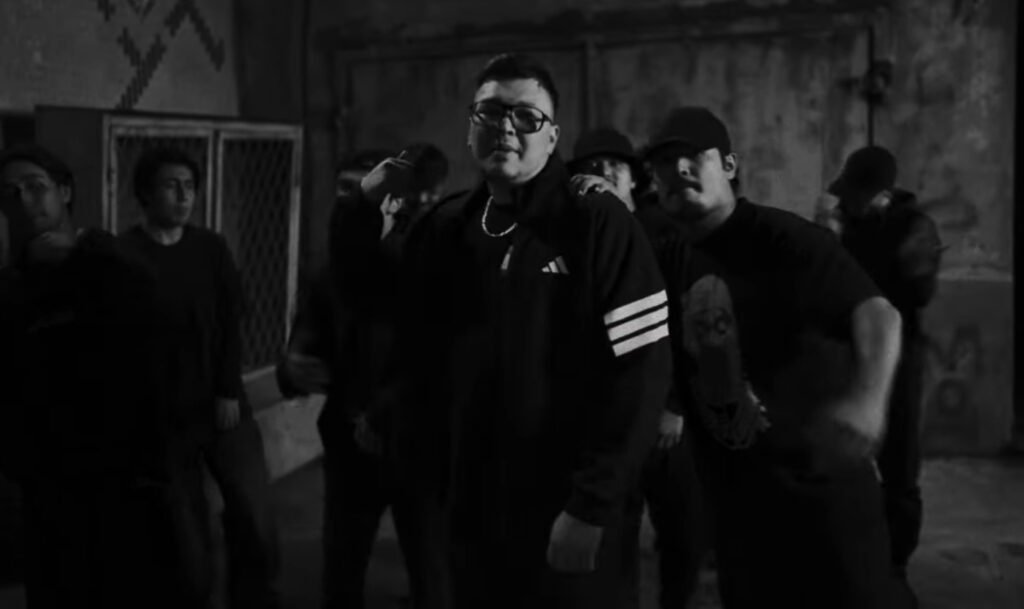
Uzbek rap deals mainly with social issues as in Uzbekistan, there are a lot of them. Shok spoke mainly about wide-spread poverty and the lack of accountability for politicians.
Free speech is highly limited as well and artists must wade carefully into waters nearing criticism of the government. For example, according to the Human Rights Watch several citizens and bloggers were imprisoned in 2024 for “insulting the president online”. Shok said he has no desire to find out what the consequences of voicing dissent would be.
Yet if there is one thing Shok could talk about more than rap, it’s politics. He jokes that when he writes rap it’s all “socialist propaganda.” He releases his politically provocative songs in a private telegram group chat of just three friends from back home.
“If you talk to your parents about politics, they say ‘no, don’t talk about it.’ My generation is a bit more daring, you see some stuff on the internet, but it’s not as much as it needs to be. My mom especially makes sure that I don’t say anything against the government on social media.”
Besides being a vehicle for political expression, rap has also become a way for Shok to understand himself. When he began to write his own songs in his early teen years, he didn’t have much to say – but that didn’t stop 15-year-old Shok from having a punk-like sense of invincibility.
“I used to think that all there is to life is to be successful, I used to walk around and think everyone was a peasant. I used to be the best everywhere, at every school, and everywhere I worked, and all of a sudden it started fading away.”
His invincibility shattered when he applied to university in the U.S. after high school, but was denied the government scholarship he needed to pay for it. The scholarship from the Uzbek government would have paid for most of his studies under the condition that he return to Uzbekistan after graduation and work for the government.
“They told me that they look for people who will 100% come back and are 100% patriotic–and I guess they could tell from the way I talk about things that I’m not like that.”
To his honest recollection, it was the first time he had ever failed, and it sent him spiraling into insecurity and hopelessness.
“For me it was all logic, everything could be explained. I thought emotions didn’t matter because they are illogical. But now I’ve learned empathy, frontal-lobe development basically.”
As he opened up to accepting the chaotic nature of human emotion and relationships, he also began to be more creatively productive.
Art takes a lot of emotional expression, and a lot of the time, Shok doesn’t know how to be completely vulnerable in his music. He hides his thoughts in metaphors, unsure if he’s afraid or just unable to find the right words. But he also says rap is a part of the solution to the nonchalance epidemic of his generation.
Shok pulled up a message he sent years ago to that first Uzbek rapper that he’d discovered. He read it outloud: “I am a big fan of rap music, and until I saw you, I thought rap in Uzbek was impossible. I’m happy that you’re doing it. You inspired me to sit down and write my own stuff in Uzbek. Keep it up.”
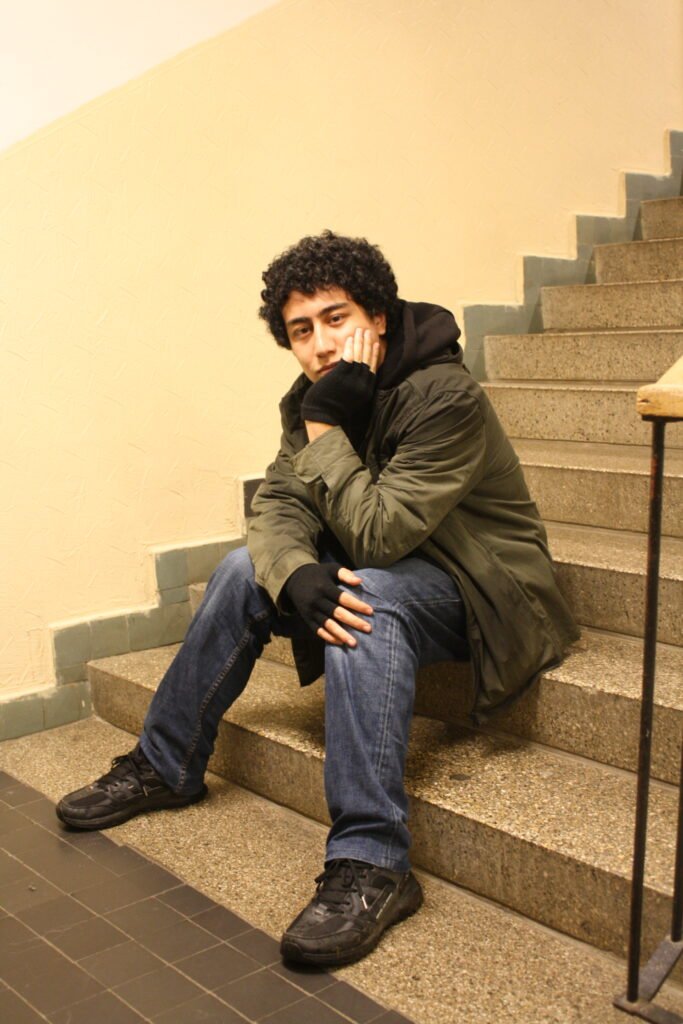
He stood in the cold, rainy park because he preferred it to sitting in a dingy, crowded bar. Shok put out his cigarette on the ground and reached to light another one, sporting his usual jacket and fingerless gloves as he paced in a small circle.
“If I didn’t have anything other than rap music, I would probably stay in Uzbekistan and do it.”
But he decided to seek better opportunities abroad and study computer science in Czechia. So Shok fervently supports his favorite Uzbek rappers by buying their music, reposting their content, and sending messages every so often just to remind them that someone out there is listening.
Shok is a blunt guy, a trait he points out as being very different from his American friends. But he’s honest about himself too, vocal in his uncertainties about how his music or even how his life will develop.
“Most of the time I don’t know how to put into words what I’m feeling and thinking. I might be afraid of saying things straight-up. But I hate this world where trying is cringe and the more I write, the more serious I take myself.”