In a world where journalists are silenced by fear or force, Press Play Prague 2025, a five-day festival at Kino Atlas from Oct. 7–11, used documentary film to confront the growing threats facing the press.
Organised by Project Syndicate and Deník Referendum, the festival returned for its second edition under the theme “Journalism Under Pressure,” featuring competitive and non-competitive screenings alongside panels and discussions. Across its program, these sessions highlighted both the personal and professional risks of truth-telling, from threatened reporters in Mexico to the hidden lives of Eastern European laborers in Western Europe.
“This festival is about making the world safer and better,” said Søren Kelstrup, the Danish ambassador to Czechia.
Crowned Best Documentary and recipient of the Student Jury Award, State of Silence (2024) explores the dangers of uncovering the truth in Mexico. Directed by Santiago Maza and produced by Diego Luna and Gael García Bernal, the film shows why Mexico is frequently ranked among the most dangerous countries to be a journalist.
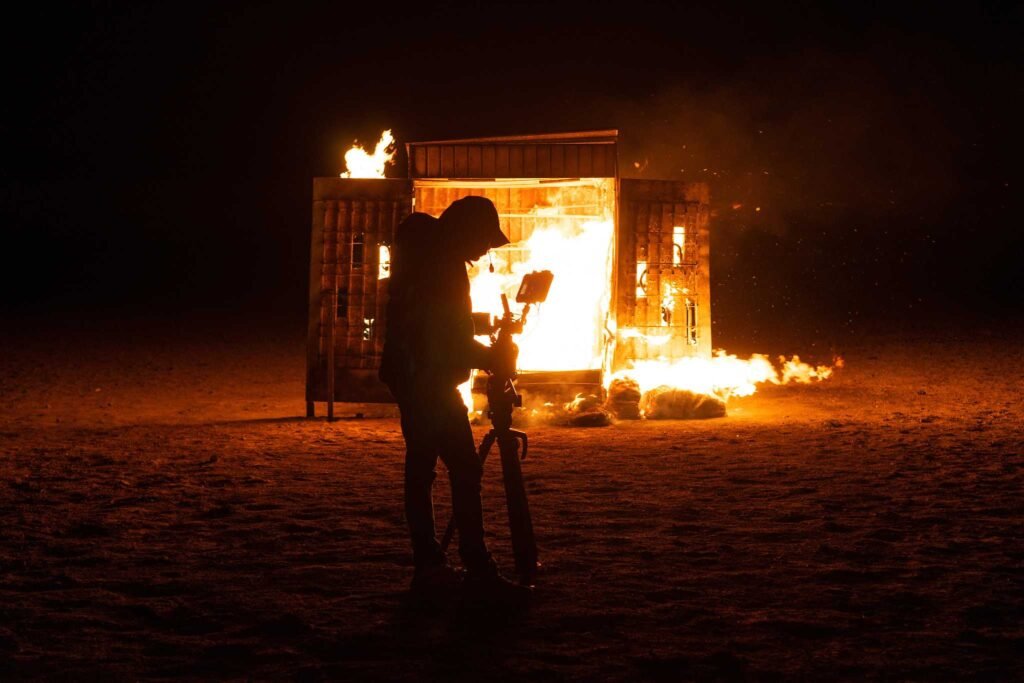
The story follows four journalists from different regions, each recounting personal trauma and threats that often forced them to seek political refuge. The burning kiosk in the opening scene signals the film’s harsh approach, with vibrant imagery and jagged editing that mirrors the intensity of the stories.
Most strikingly, the film features an interview with Griselda Triana, a journalist and widow of Javier Valdez, killed for his reporting. Though she is not one of the documentary’s main subjects, her dual perspective, as a journalist and someone personally affected by a journalist’s death, contributes to the emotional tone that resonates throughout the film.
Though the choppy editing and weight of each account are intentional, some viewers, especially non-Spanish speakers relying on subtitles, may find it hard to follow. The rapid shifts between scenes, stories, and subjects, combined with powerful visuals, can occasionally feel overwhelming.
Other festival films included panel discussions with directors, but State of Silence did not. Including such a discussion could have deepened the experience, offering further insight into the filmmakers’ method that made the documentary so effective.
However, rarely do I leave the cinema with the hairs standing on my arms, unable to move from my seat. From its striking visuals to the final credit sequence, the artistry of this documentary is unforgettable, making it clear that its message was intended to linger long after the lights came up.

State of Silence. Photo by: Odei Zabaleta
Although it did not win awards, Limits of Europe (2024) was a standout screening. The film follows Czech journalist Saša Uhlová on a two-year undercover journey exposing the harsh conditions faced by many Eastern European immigrant workers across Europe.
Dedicated to her father, Peter Uhl, a well-known Czech journalist, activist, and politician, the film conveys his importance even to audiences unfamiliar with his legacy.
What sets this documentary apart is its unconventional, hidden-camera style, blending Uhlová’s personal life with her professional work. The audience is drawn into her journey, experiencing the conditions she uncovers through the emotional connection she builds with viewers.
From sitting at dinner tables with her son to dancing with new friends in Germany, the film feels intimate. When her father dies, the loss feels profoundly personal, making it difficult to hold back tears.
The film’s most memorable moments unfold as Uhlová works in France caring for the elderly. These emotionally intense scenes resonate immediately with viewers, drawing them into the weight and humanity of her experience.
Limits of Europe is more than an investigation of harsh working conditions; it exposes vast social inequalities across Europe. Countries often considered ideal destinations, such as Ireland, are rife with worker abuses impacting the poor and immigrants.
Although some viewers may appreciate the personal approach, others may find it creates distance from the broader investigation. The film is also less connected to the festival’s theme, as it rarely addresses journalistic struggles.
I appreciated its intimacy and the way it brought these stories to life, but I found myself more engaged with other screenings that focused directly on journalists under threat. Still, it offered a thought-provoking perspective on exploitation and persistent inequalities.

Limits of Europe. Photo by: Kolam Production
Beyond individual screenings, the festival was lively and well-organized, with affordable tickets that made it accessible to a wide audience.
As one of the first of its kind in Prague to combine screenings with in-depth discussions about press freedom, it offered an important space for reflection and dialogue. From start to finish, Press Play Prague 2025 balanced engagement, education, and entertainment, leaving audiences with a deeper understanding of journalism under pressure and memorable cinematic experiences.
“I loved it and it’s really important to stay informed but going to almost every competitive screening was a lot to handle mentally … very heavy topics,” said Phillip Ban.