

Young Czechs are drinking and smoking less, instead turning to substances such as cocaine, e-cigarettes, nicotine patches, and other risky alternatives, according to the National Monitoring Center for Drugs and Addiction.
Czechia is known for its prolific drinking culture and cheap alcohol. Oftentimes, beer is cheaper than water in restaurant establishments and some supermarkets. For many, it comes as no surprise that just under 20 percent of the country’s population over the age of 15 consumes alcohol on a “risky” level.
“The drinking culture here is very normalized compared to the United States,” Eli Sims, a second year student at AAU, notes that since moving to Czechia he has begun to drink “way more” and he found “that the overconsumption of alcohol tends to be praised as cool.”
Denisa Hlavacova, a Czech third year student, holds a different opinion, stating that Czech teens and young adults usually go through an “alcohol phase age 13-17”, and by the time they reach the legal drinking age of 18, most Czechs quit drinking.
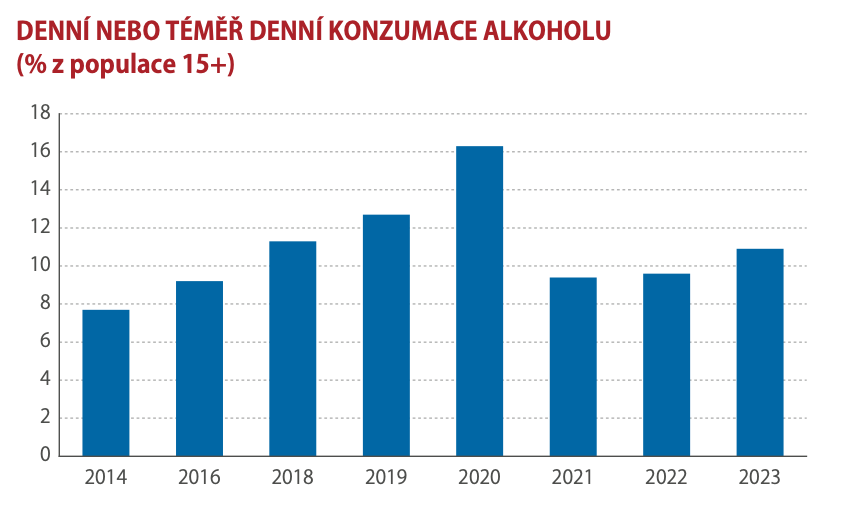
According to the Czech Statistical Office, alcohol consumption in Czechia has been falling since 2019, where around 13 percent of the population over the age of 15 were drinking alcohol on a “daily” or “almost daily” basis. Currently, that figure sits at around 11 percent following a rise in consumption during the pandemic.
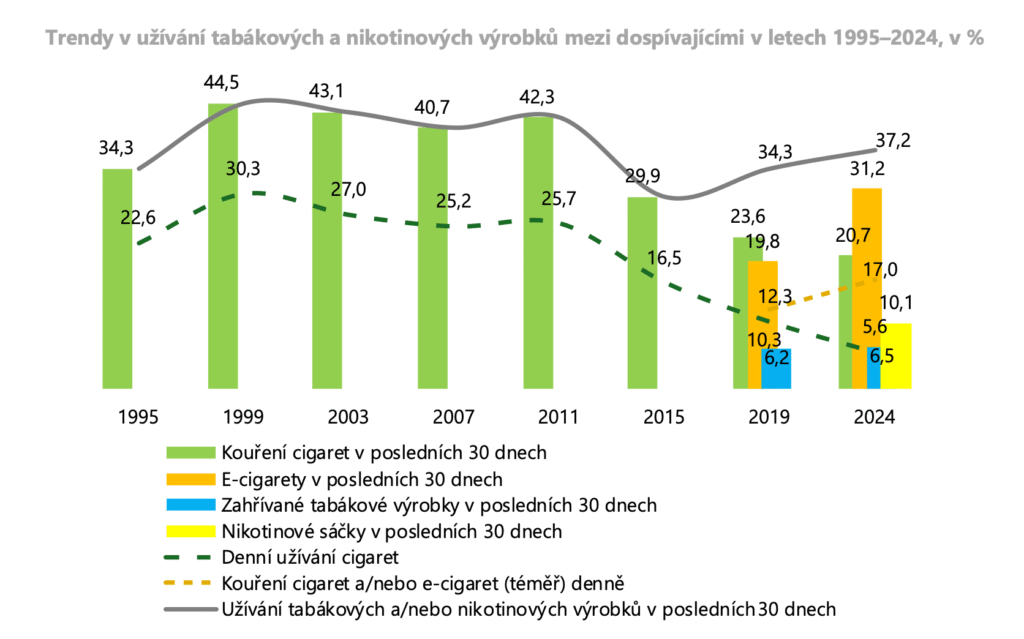
While alcohol and cigarette consumption may be down among adults and youth alike, the use of “alternatives” in young individuals, teenagers and students in particular, is on the rise. In 2024 data on e-cigarettes, nicotine pouches, and other tobacco products began to be collected, but the figures since then have shown a rise in overall nicotine consumption.
Over the past nine years there is an overall increase in use of smoking and nicotine products by around seven percent between 2015 and 2024 when data on e-cigarettes, nicotine pouches, and other tobacco products began to be included in the data.
While some alternative substances to cigarettes and alcohol such as nicotine pouches can be considered “safer” for those already smoking, these products have been shown to still pose significant risks to young adults in particular, whose brains aren’t fully developed until the age of 26.
The shift in the use of alcohol and cigarettes to “alternative” nicotine products, and other substances has been a slow one, but not unnoticeable.
Czech student Denisa Hlavacova said she feels that people prefer drugs to alcohol and that she believes drugs have become more available in recent years.