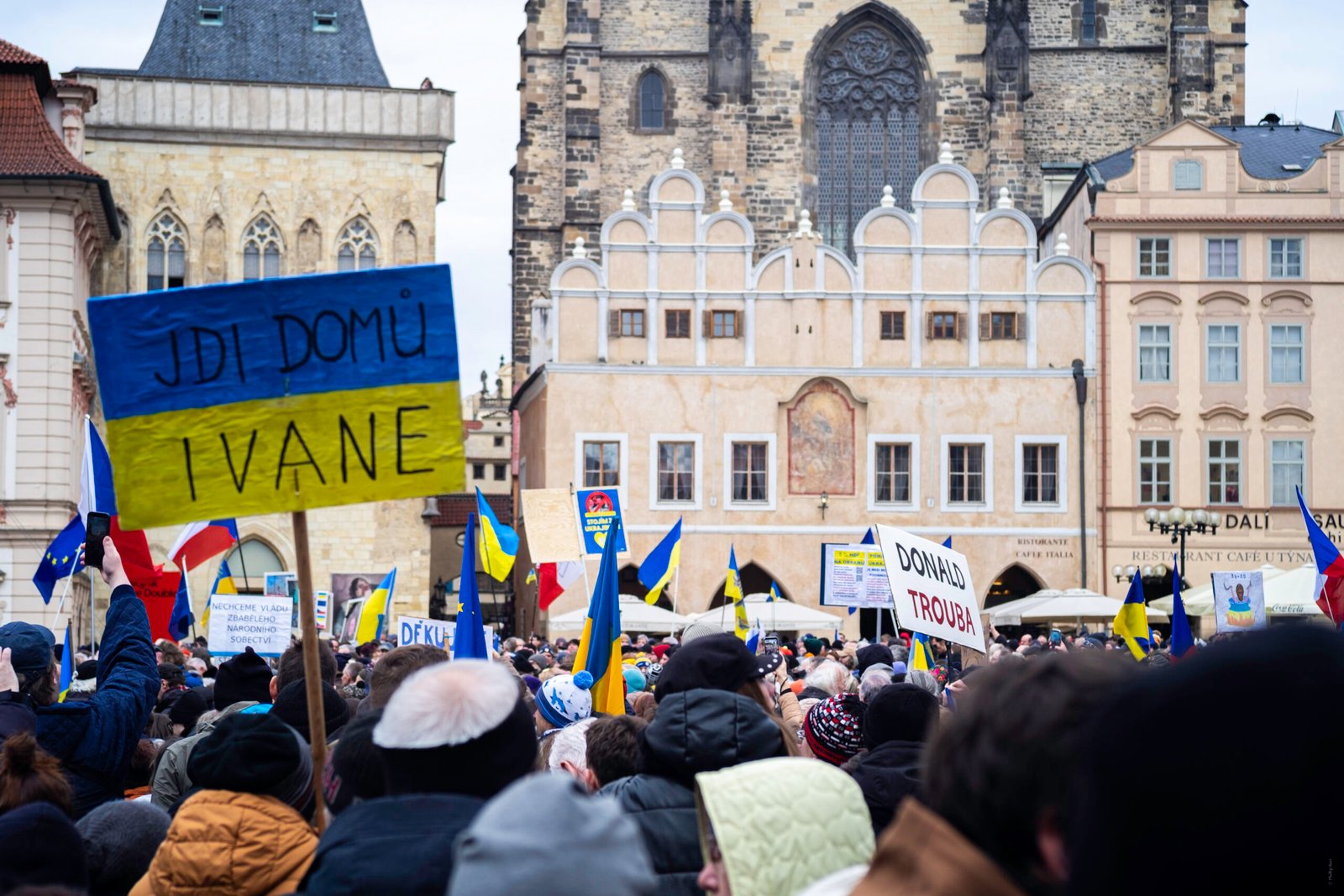

Feb. 24 marks the fourth anniversary of Russia’s full-scale invasion of Ukraine and as the war continues Czech support becomes increasingly polarized and rhetoric about the war shifts in Ukraine itself.
The Language of Peace in Ukraine
Throughout 2022 and 2023, President Volodymyr Zelenskyy repeatedly emphasized territorial integrity and rejected any territorial negotiations with Russia. The liberation of Kherson in 2022 reinforced hopes that Ukraine could reverse Russian gains and maintain the initiative. This stance was strongly supported with 98% believing in Ukraine’s victory and 91% supporting Zelenskyy in August of 2022.
However, by 2024, with increased infrastructure strikes, a territory stalemate, and uncertainty over long-term international assistance, especially from the U.S., Ukraine was forced to change tone and open up to negotiations.
The word “victory” practically disappeared from official speeches, being replaced with the word “peace” and emphasis moved from inevitable victory to endurance.
“What does Ukraine want? Peace? Yes. At any price? No. We want the end of the war, but not the end of Ukraine,” said Zelenskyy in his 2025 New Year’s speech.
In early 2026, many Ukrainian cities face recurring blackouts amid record-low temperatures, while the front lines remain practically static and negotiations show no significant progress. Only 53% now categorically reject territorial concessions, and the majority anticipate continued fighting into 2027 or beyond, according to KIIS.
Public Support in Czechia
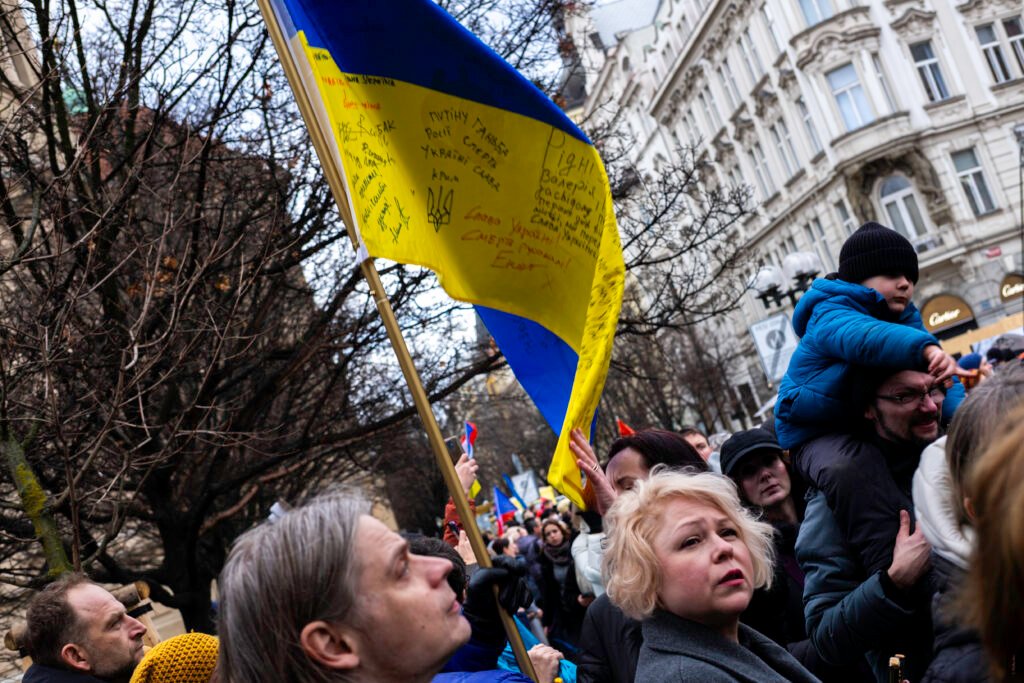
The full-scale invasion triggered an immediate wave of solidarity. Volunteers organised humanitarian aid, language courses were established and the government coordinated accommodation. Czechia eventually became the country with the highest number of refugees per capita in the EU.
Russia’s invasion of Ukraine evoked parallels with the 1968 Prague Spring and the Warsaw Pact intervention in Czechoslovakia, making support not only geopolitical but also emotionally charged.
As the war continued, public opinion became more nuanced, influenced by domestic politics, war fatigue, and growing popularity of right-leaning political parties.
Czech Prime Minister, Andrej Babiš, has criticized aspects of military assistance and emphasized diplomatic solutions, stating that the European Commission should find other ways to support Ukraine. While surveys still show strong support for humanitarian aid and diplomatic pressure on Russia, Czechs are now more divided on supporting long-term military assistance to Ukraine.
A Shared Transformation
What was supposed to be a swift war has become a test of endurance, with seemingly few solutions left. In Ukraine, the communication shifted from victory to peace with dignity. While in Czechia, the mood has evolved from complete support to a debate on sustainability and security.
Behind these geopolitical transformations stand millions of Ukrainians whose lives have been reshaped by war, with families displaced, cities destroyed, and societies forced to adapt. Millions have sought refuge in other countries, at least 3.5 million people have lost their homes, and around 20 thousand Ukrainian children have been taken to Russia.
The anniversary is not only a marker of time passed, but a reminder that the consequences of this conflict extend far beyond the front lines.