
Almost nine years after the failed 2017 independence bid, independence is no longer the main political priority.
For many young Catalans, concerns about housing, jobs and the cost of living are competing with the dream of an independent Catalonia. Does this mean that young people have abandoned the cause entirely, or have they simply started approaching it differently?
Catalonia is a region in north-eastern Spain with more than eight million residents and a long history of defending its language, culture and political autonomy. Under Francisco Franco’s dictatorship, Catalan institutions were abolished and the use of the Catalan language was restricted. After Franco’s death, Catalonia regained self-government, but tensions with the Spanish government continued.
The conflict intensified in 2010, when Spain’s Constitutional Court changed parts of Catalonia’s Statute of Autonomy. After this, years of growing tensions continued, until the Catalan government held an independence referendum on Oct. 1,1 October 2017 – ruled illegal by Spain’s Constitutional Court. Around 90% of votes cast supported independence, even though the turnout was about 43%. That same month, the Catalan parliament declared independence. This independence was not recognised by any country and was additionally rejected by the EU – giving Spain means to respond by temporarily taking control of the region’s institutions under Article 155 of the Spanish Constitution.
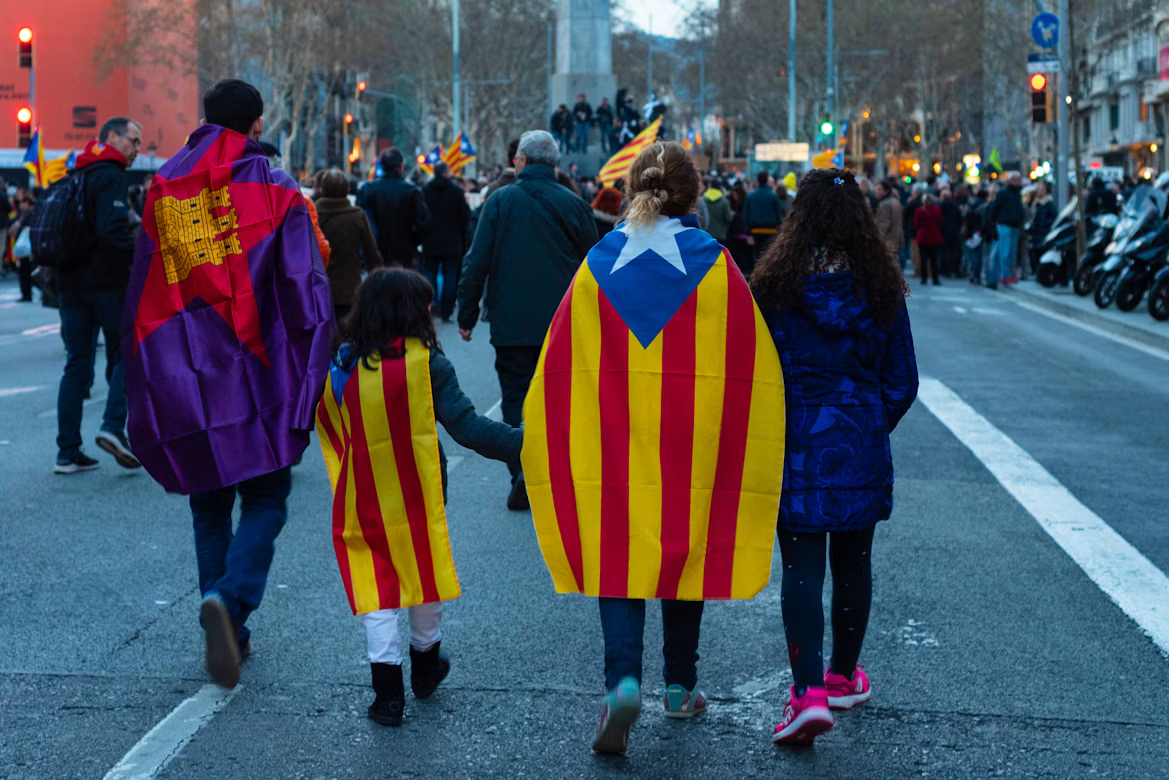
Since then, the independence movement has lost a significant amount of its earlier momentum. According to figures cited by Catalonia’s Centre for Opinion Studies (CEO), support for an independent state among 18- to 24-year-olds has fallen from almost 49% to 33% in a decade.
Neus, a 62-year-old woman from Lleida, believes that younger people are less involved in both demonstrating and political campaigns and she says that the decline in activism is worrying. Her two adult children, despite sympathizing with independence, do not actively participate in the movement, she says.
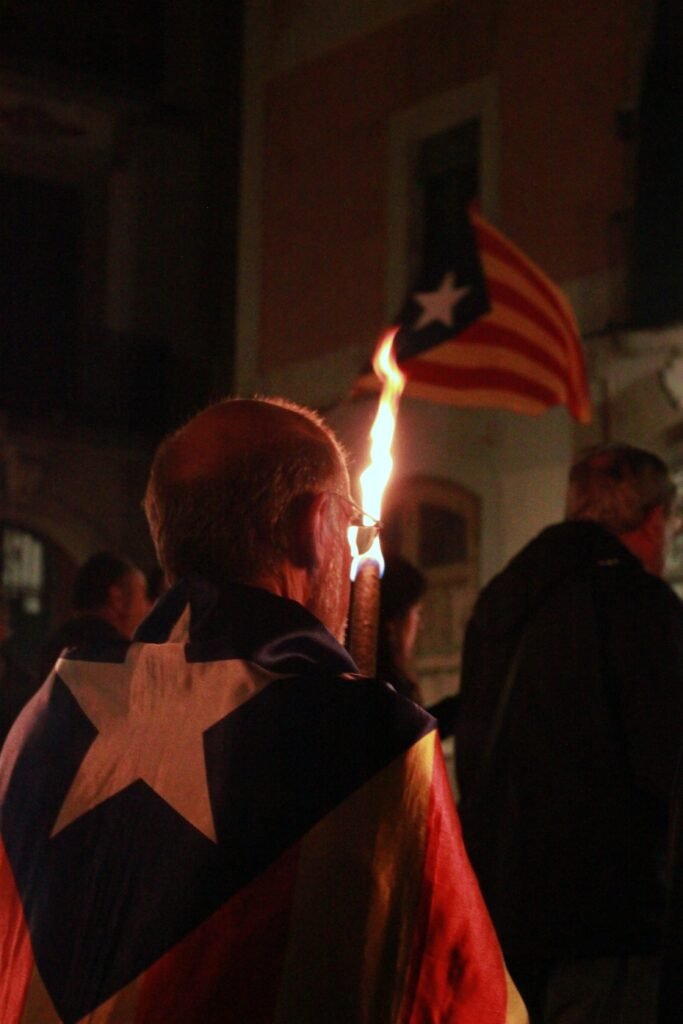
Franco Antonio, a 24-year-old Peruvian living in Catalonia, sees the situation a little differently. He argues that some young people remain committed to independence but are turning away from traditional political parties, and look for organisations outside the parliament. In his
view, less involvement in an established political sphere does not automatically mean less political commitment to the idea of independence.
Others are more concerned with practical problems in the hands of politics, rather than political identity of the region. Adam, a 30-year-old from Barcelona, supports independence partly because he believes it could offer an alternative to Spain’s current political system. However, for him the issue is not only about national identity but also about whether political change can practically improve people’s lives.
Anna, a 32-year-old from Llers, describes a different concern: political exhaustion. She stresses that discussions about independence often create unnecessary divisions between Catalan and Spanish identities. Supporting Catalan language and culture, she argues, should not mean rejecting Spanish culture. She is also less optimistic about independence happening in the near future than she was in 2017.
It is also important to note that the Catalan nationalism itself is changing. Aliança Catalana, a nationalist party in Catalonia led by Sílvia Orriols, combines a support for independence with hard-line positions on immigration and national identity. A CEO poll published in July 2026 shows that the party could win 23 to 25 seats in a future Catalan election, potentially overtaking Junts, the historically dominant pro-independence party. These, however, are polling estimates, not election results.
It is crucial to mention that the Spanish government has tried to ease tensions between itself and the region, namely through the 2024 amnesty law for people involved in the independence process. Then, in July this year, the Court of Justice of the European Union ruled that EU law did not preclude the law – although questions about its application in individual cases remain asked actively – and therefore allows Spain to grant amnesties to the individuals which took part in the independence bid of 2017. This ruling was an important legal development, but it does not make political disagreements disappear.
Catalonia’s younger generation might not be united in its views. Some remain committed to independence, others have moved towards different political movements, and many are focused on everyday economic pressures. But even though the decline in support for independence is clear in the polls, it does not tell the whole story.
Rather than simply disappearing, Catalan nationalism may be changing. The key question is no longer only whether young people want independence, but what they expect from the movement and whether its political parties can respond to their concerns.