

By Alexander Tabares and Phillip Ban
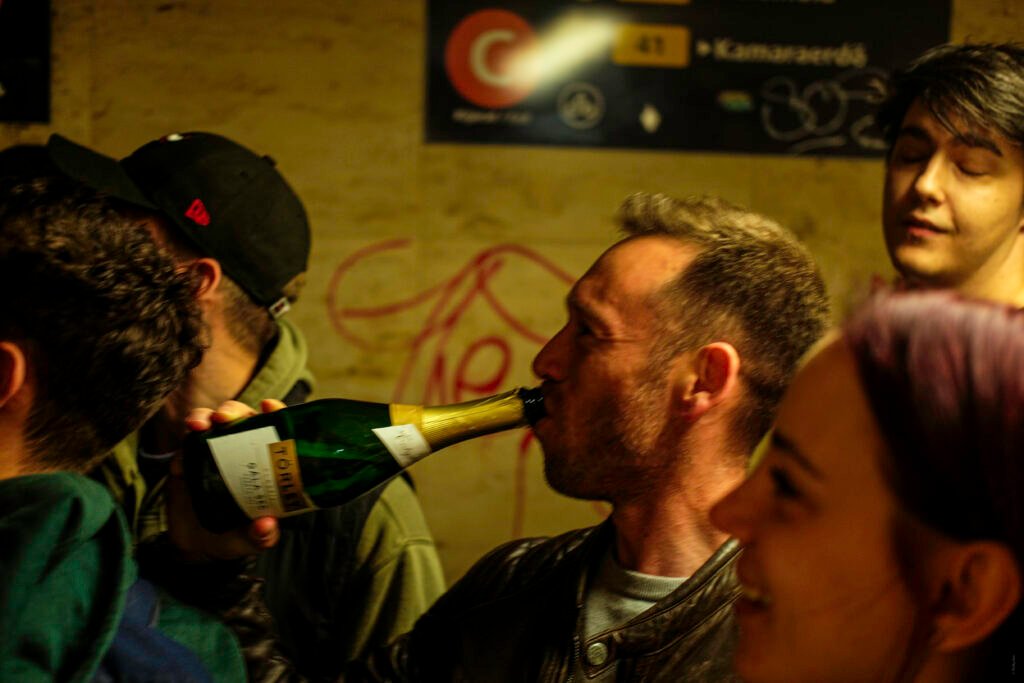
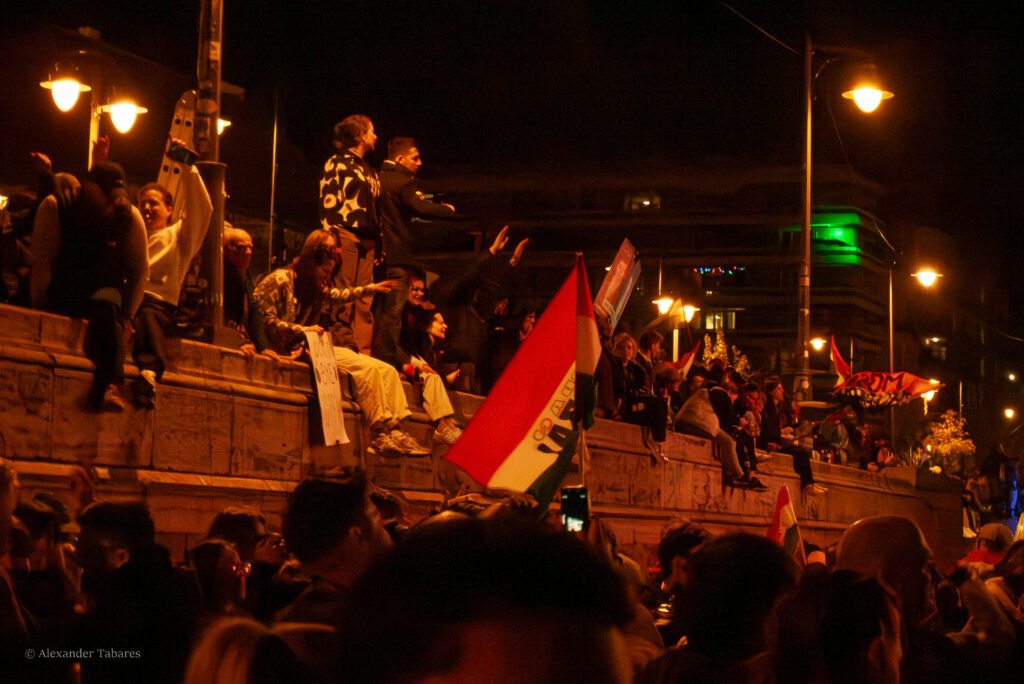
Hungarians of all ages took to the streets in celebration on Sunday, April 12 opening champagne bottles and blasting music after the end of Victor Orban’s 16-year reign as prime minister and the landslide victory of the opposition leader, Petér Magyar, and the Tisza party.
“The grass is just greener, everything is just better since Sunday. Orban is still our prime minister but now there is this hopeful atmosphere,” Rozália Berkó, an ELTE student and Budapest native, said.
Tisza won a super-majority in Parliament, with 141 of 199 members, marking the first time in 16 years that Fidesz was not voted in as the ruling party in Hungary. The results were met with mass celebrations in the capital city and other cities like Szeged.
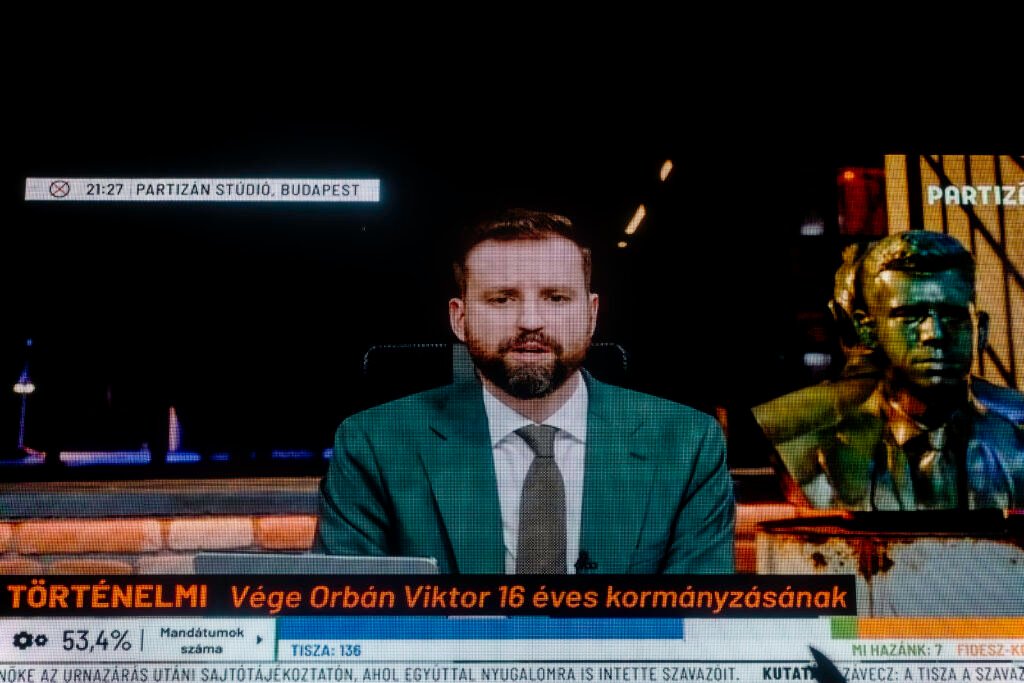
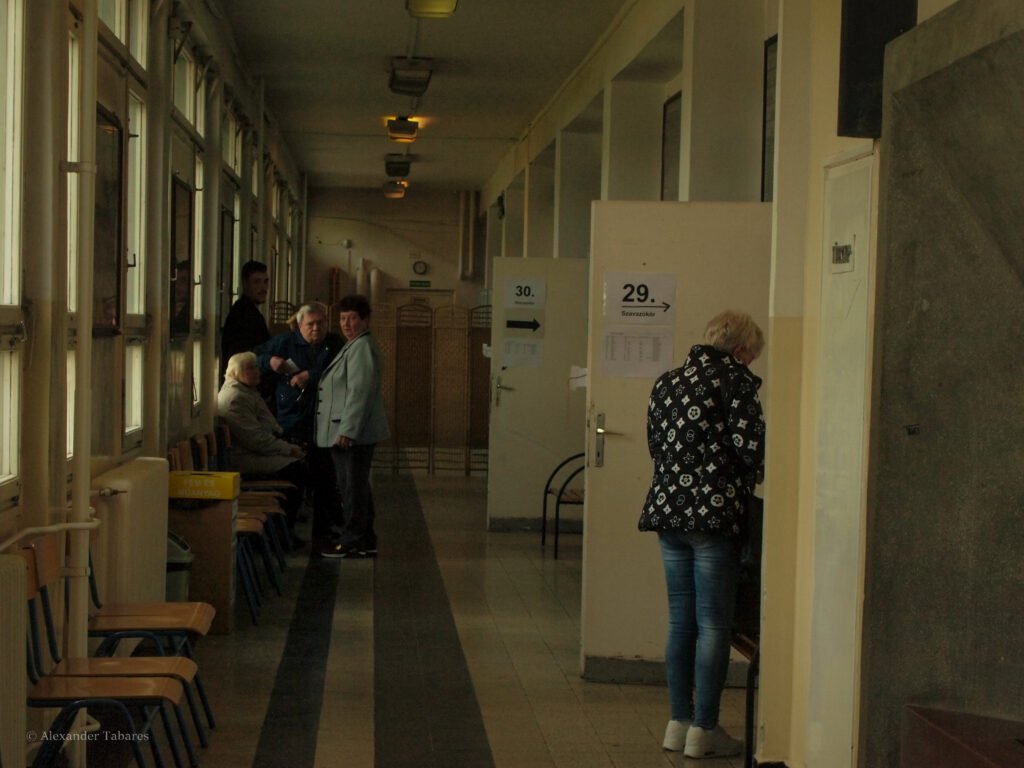
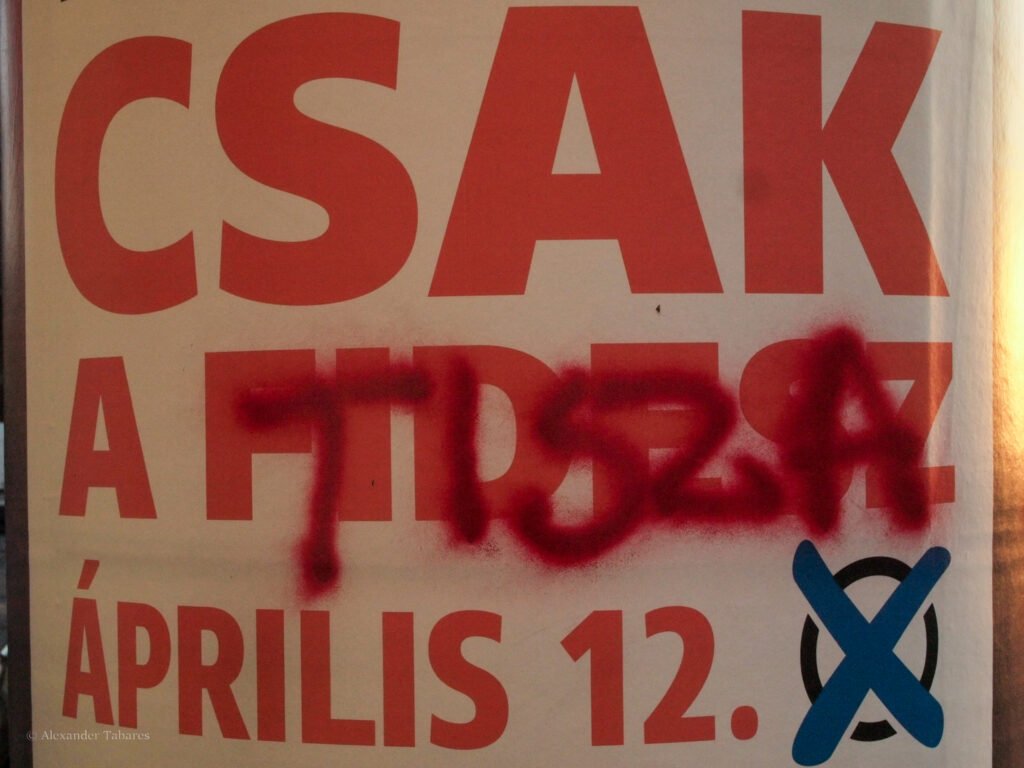
Photos by Alexander Tabares and Phillip Ban/Lennon Wall.
However, earlier on election day the mood was not so optimistic as voters cycled through polling stations set up in schools throughout Budapest city and reminded each other to use their own pens to avoid risking their vote not being manipulated.
Berkó spoke of the palpable tension in the air. She recalled having difficulty focusing on anything else that day.
“Everyone was holding their breath,” Berkó said.
Approximately two hours into the ballot counting process, around 53.4 percent of the votes were counted. What followed was Victor Orban’s shortest speech on record as Prime Minister, just a quick surrender and a congratulations directed at his overwhelmingly victorious opposition Tisza.
“The election result is painful for us, but clear. But no matter how it turned out, we will also serve our country and the Hungarian nation, from the opposition,” Reuters reported Orban as saying.
That short speech sparked massive celebrations, with champagne handed out to share, techno music blasting, with chants billowing periodically through the crowd.
Prominent chants included “Europa” and “Ruszkik Haza” which translates to “Russians Go Home,” and was a historic call for resistance dating back to the invasion of Hungary by the Soviet Union in 1956.
Another chant, translated to “The Tisza is flooding,” is a reference to the Tisza river that runs through Hungary and the party, which is an abbreviated form of the Hungarian word for respect.
The iconic chain bridge was taken over by crowds celebrating in the streets, leaving buses and taxis at a standstill in the human traffic.
The streets closest to Magyar’s speech and Battyany Square were packed shoulder-to-shoulder with excited people listening to the new Prime Minister’s first calls to action, including for the resignation of many key leaders of the previous government.
“Imagine what all these people would have done if [Magyar Peter] didn’t win,” graduate student Anna Berkó said.
The unexpected swiftness of the result seemed to increase the intensity of the celebrations, with dancing people lining the streets sharing all sorts of alcoholic drinks. Strangers hugged and thanked each other for voting as Fidesz signs were torn down, ripped and then danced on.
Each political party was represented in advertisements and posters across the capital on nearly every lamppost and street corner.
Fidesz billboards and signs made up a significant majority, as has been the case in previous elections. According to Transparency International Hungary, in the 2022 elections, 8.4 million euros of outdoor advertising was in favor of Fidesz, dwarfing the second highest spending, 1.05 million euros in support for the now disbanded United Opposition party. Although data has yet to be released on the recent election, the trend will likely continue.
Some political advertisement billboards featured a comic-book style depiction of Magyar as a two-faced villain, or of Ukrainian President, Volodymyr Zelenskyy, with his hand outstretched seemingly asking directly for money. Many such advertisements were littered with graffiti, often covering up the political messaging with direct counter messages.
“Most Tisza voters can’t identify themselves as Tisza voters, they want to show the world and Orban’s regime what the people can do,” Csombor, a media student in Budapest, explained.
This was a strong sentiment amongst voters as any uncertainty about Magyar was drowned out by a desire for change.
“Maybe he will be a good politician, maybe not, but this is the question for the future,” Rica, a Hungarian voter, said.
The newcomer Magyar was appointed Minister of Foreign Affairs by the Fidesz party, leaving only two years ago to start the opposition party Tisza. Some locals raised concern about Magyar’s political experience and intentions.
“The young people are voting out of frustration, Magyar is a hothead with no experience,” an elderly man, who wished to be called Peter, said.
The government appointed by the Tisza leadership is expected to face challenges when attempting to implement the changes it promises after the damage of the long in power Fidesz party.
Berkó said the new government will have to try, “building a castle out of shit.”








Such great journalistic work!
Sehnsucht nach Freiheit, getragen von der Hoffnung und Glück, und das wache Erspüren
einer gemeinsamen, gestaltenden Energie, die unter den jungen Menschen aufbricht und
sie dazu bewegt, Verantwortung füreinander zu übernehmen und an der Verwirklichung,
einer gerechteren Gesellschaft mitzuwirken.
Dein Onkel-mit 88 Jahren.