
Shaped by centuries of defending its language, culture and land, Ukrainians continue to fight for their independence and freedom. Ukrainian identity is often shared through stories spread across generations, taught in school and listened to at home. But what does it mean to be Ukrainian today?
To uncover how Ukrainians define themselves in this changing, fragile world, I have spoken with two Ukrainian voices from different stages of life: a woman who had settled into a life she trusted until the war shattered it overnight, and a student whose teen years turned into a fight of survival.
Natalia Bilous
Natalia Bilous is a 45 year-old entrepreneur and cosmetologist-esthetician. She found refuge in Prague where she has been living for over 3 years, selling her past to protect her life but leaving behind her house in Kropyvnytskyi; the house that held all her memories of a once peaceful Ukraine.
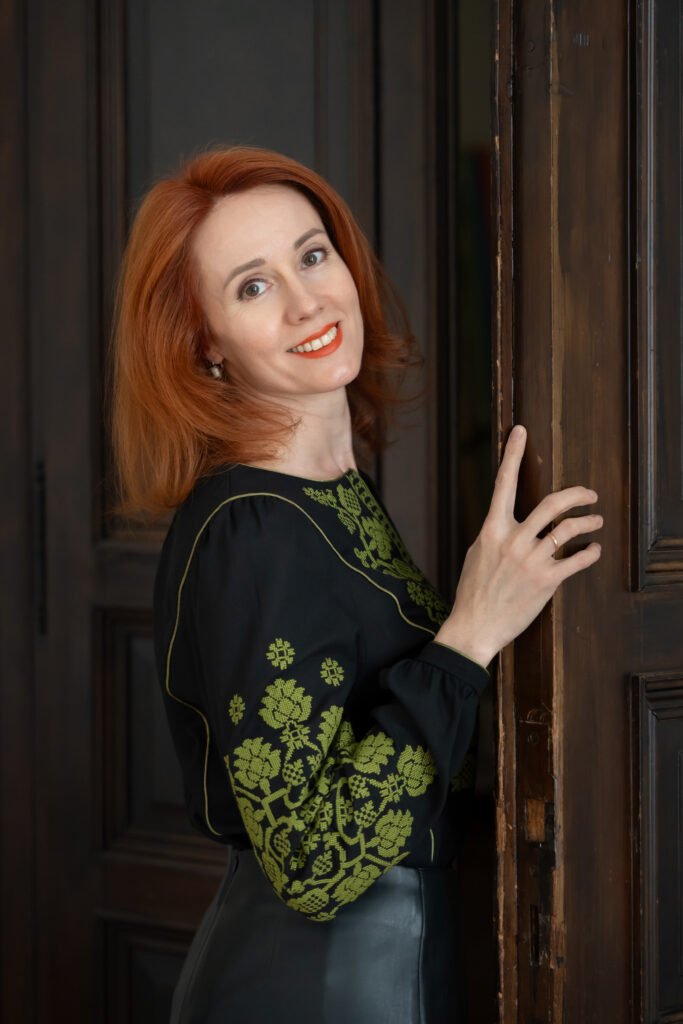
We sat down in her cozy white cosmetologist studio where everything was as pure and tidy as a quiet winter morning.
“We moved here because of the war as I wanted my kids to feel safe. Luckily, everything went very easily for me and my family, I must admit we feel at home here. Although, we miss talking to our closest ones that are in Ukraine,” said Natalia.
The most difficult part of adjusting to a new place for her was communication. Without knowing Czech, it was extremely difficult for her to solve issues like getting a child into a school and into after-school activities.
“I didn’t know the language, so I literally had to communicate with the Czechs through gestures, as if my hands were speaking for me.”
Thankfully, Natalia met incredibly understanding and kind people throughout her journey. Even though she hasn’t been living in Ukraine since the war started in 2022, she is still deeply connected to Ukrainian culture and language. “We only speak Ukrainian at home, I rarely use Russian. Only if another person or a client doesn’t speak Ukrainian, I can switch to Russian or Czech.”
Languages die out when they are no longer passed down, however, Bilous is not afraid of her kids forgetting Ukrainian.
“I don’t have any fear that my daughter will lose Ukrainian because she simply doesn’t want to. She also attends a kids’ scout club here in Prague where they have to speak Ukrainian, sing Ukrainian songs, celebrate Ukrainian holidays and embrace traditions. She wouldn’t be able to forget where she came from,” Natalia emphasized.
When I asked Natalia what it means for her to be Ukrainian today compared to before the full-scale Russian invasion, she sighed, pausing as it seemed a nostalgic sadness rose inside of her.
“Before 2014 we all knew that we were Ukrainians but I don’t think we felt ‘fully’ Ukrainian. Ukraine seemed divided between West and East, as if we didn’t have this sense of patriotism and unity. It was just a country and everyone chose to speak a language they wanted, either Russian or Ukrainian. After 2014, and especially after 2022 everything had changed.’’
Natalia realized she no longer wanted to belong to any other country when a sense of patriotism awakened in her. She explained that she prefers to speak Ukrainian so others can see how melodic and beautiful the language is.
“My home is where my family is and I am grateful for that. I miss Ukraine but I am here now and I appreciate my life.” Despite the war pushing her away from the home she thought she’d grow old in, Natalia said she feels calm and safe in Prague.
Kateryna Mylovydova
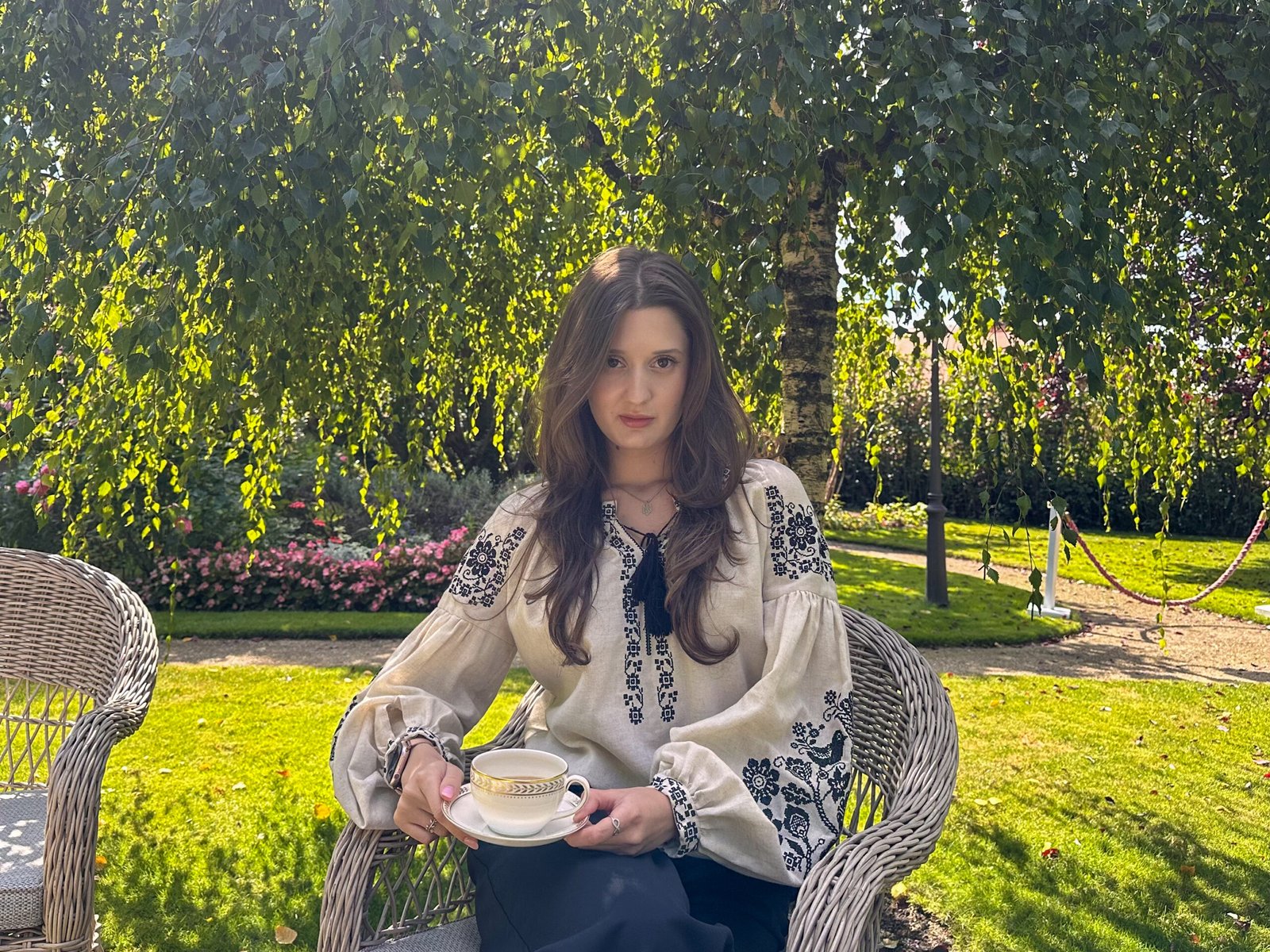
Ukrainian identity is not constructed by a single voice and to understand how Ukrainian youth define their belonging, I spoke with a young student whose adulthood began under the sounds of sirens. Kateryna Mylovydova is a 21 year old International Relations student at Anglo-American University.
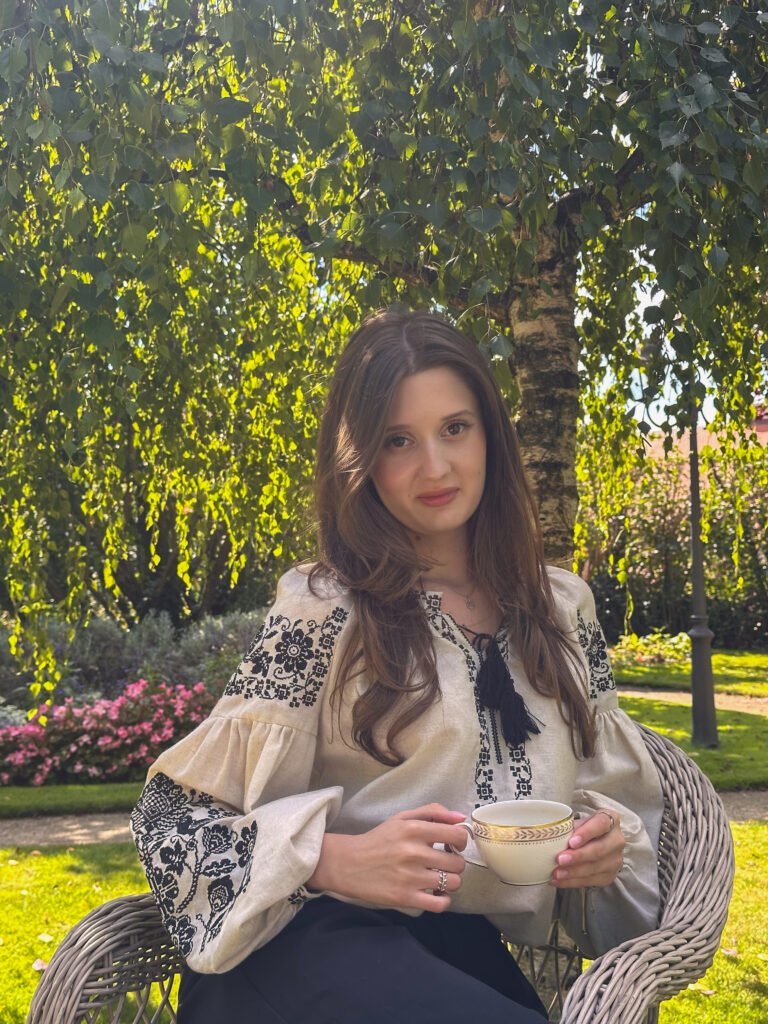
Kateryna is one of my closest friends in Prague and she is probably the kindest person I have ever met. She carries kindness in the smallest things, in how she remembers tiny details about people, and always offers help before you even realize you need it. I invited her over to my place to help me decorate my apartment for Christmas and as we finished filling the room with small touches of winter magic, she began sharing her thoughts about the reality of being Ukrainian.
Kateryna and her family were looking for a safe place once the war began and Prague seemed to be the best fit, not only because of its amazing location, but also because of the Czech language and mentality similar to Ukrainian culture.
“Even though I have been living in the Czech Republic for quite a long time, I still fully feel Ukrainian no matter where I go. However, after the war started, something changed in me. I began talking about Ukraine, sharing stories about our culture and its people. I started appreciating my roots and became more aware of our rich history,” Kateryna reflected.
She also remembers how, before the war, Russian culture was deeply connected to Ukrainian culture. Many of Kateryna’s friends would only listen to Russian music because it was ‘popular’ to sing in Russian and ‘unfashionable’ to sing in Ukrainian. Before the invasion, Ukrainian artists switched to using Russian or would even leave Ukraine to perform for Russian audiences.
“I didn’t see the problem before the war and didn’t notice this historical aspect of Russia trying to possess our culture by overshadowing our music, our language and our identity.“
Kateryna said that the most difficult part of adjusting to Czech culture was learning the language, even though she had expected it to come easily. When Kateryna moved to Prague, she undertook a whole package of adult responsibilities: filling out documents, searching for accommodation, and arranging for her little sister to attend school. At the same time, Kateryna was trying to learn Czech in order to apply to Czech universities. She expected things to feel similar to Ukraine, instead, she felt major differences.
I made us some chamomile tea to steady our nerves before our final exams, and we began pondering about the future. Kateryna says that she doesn’t want her children to speak Russian at all because she doesn’t think they will even need to use it.
“The war shaped me in numerous ways. First of all, I started appreciating my culture and its people. I started reading a lot about Ukrainian history as I became more curious about my heritage. Obviously, I grew up mentally and found a sense of responsibility as I suddenly found the weight of adulthood on my shoulders. I wasn’t a 17 year old teenager anymore, I must help my family and have a decent job.”
Kateryna Mylovydova joined an organization called “Generation for Ukraine” where she helps to organize events held by Ukrainian youth. A recent event called “Unissued Diplomas” was an exhibition about Ukrainians who had tragically died because of the war and never graduated. Kateryna is finishing up her studies at Anglo-American University, writing her thesis and deciding between applying for a masters program or finding a job. Even though I didn’t know her three years ago, all I see now is a beautiful, mature Ukrainian girl who, despite all the challenges she has faced, has a kind heart and unbreakable spirit making her a rare blend of gentleness and resilience. I wish you were able to get to know both of these strong women, but here is a little piece of their story to hold.