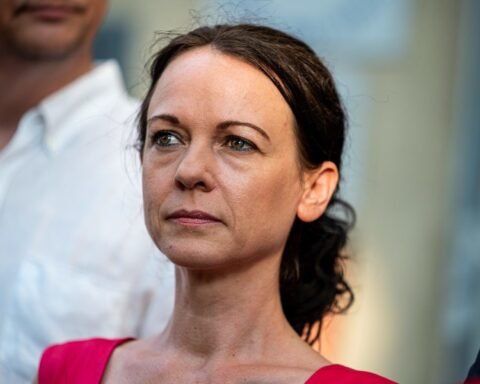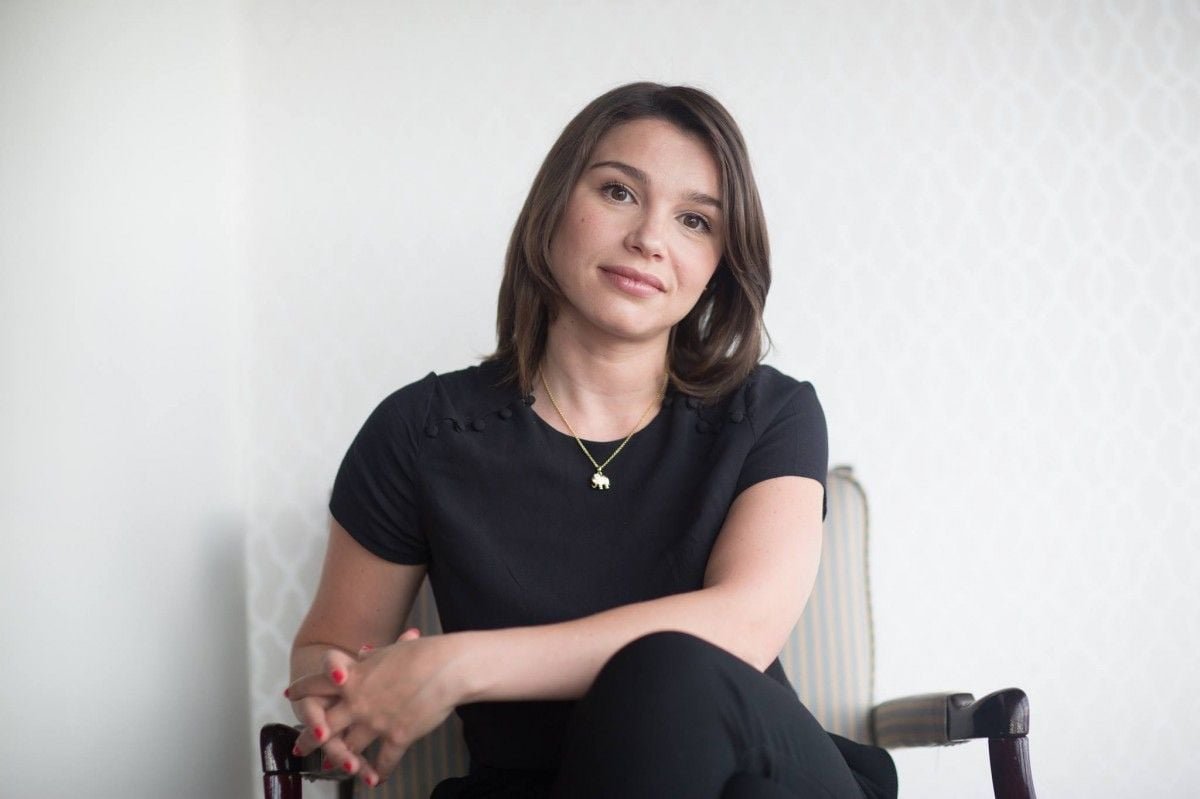

Russian dissident Zhanna Nemtsova challenged the notion of collective responsibility for Russia’s full-scale invasion of Ukraine, urging instead for personal accountability, at a public discussion hosted by the Václav Havel Library on Oct. 13.
The event featured an open conversation in which Nemtsova spoke about the assassination of her father, Boris Nemtsov, as well as her own exile from Russia, the war in Ukraine, and the struggles of Russian opposition groups.
“I believe that when everyone is guilty, no one is guilty. And I much more believe in individual responsibility and in holding people accountable for their individual actions,” Nemtsova told the audience when asked about Russian collective guilt.
Her father, Boris Nemtsov—a prominent opposition leader—was assassinated in Moscow in 2015 at the age of 55, after openly condemning Vladimir Putin’s war in Ukraine and exposing government corruption. He was also a close ally of Alexei Navalny, Russia’s most well-known anti-corruption activist, who died while in prison last year.
Nemtsova fled the country only months after her father’s death for fear of retaliation after speaking out about the assassination and the flawed investigation that followed.
“I think that there is a lot of evidence, and I think that this case is very simple to solve. But because it’s a politically motivated murder, it will not be solved as long as [Vladimir] Putin is in power,” she said.
In the discussion, she also spoke about the difficulties of maintaining an organized Russian opposition in exile.
“I can’t imagine a thriving Russian opposition political scene in exile,” she said. “Opposition is not the right term to describe Russian dissidents. It’s resistance. Opposition exists in a democracy.”
After leaving Russia, Nemtsova settled in Germany, where she co-founded the Boris Nemtsov Foundation for Freedom, a non-profit that supports educational programs, including the Masters program in Russian Studies at Charles University.
Now living in Prague and co-running the program, she considers herself a social activist rather than a political leader.
“I think there are few people like my father, or Alexei Navalny, who are so brave. I’m quite brave, but I will not go back to Russia, for example, because I don’t want to end up in prison.” Nemtsova said.