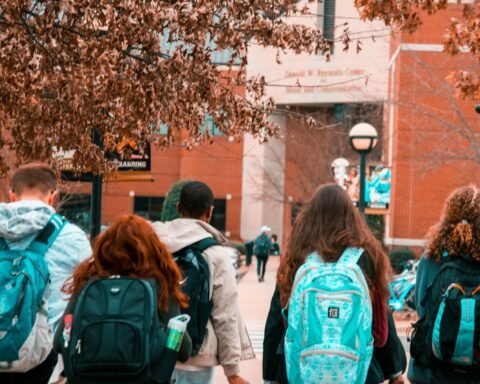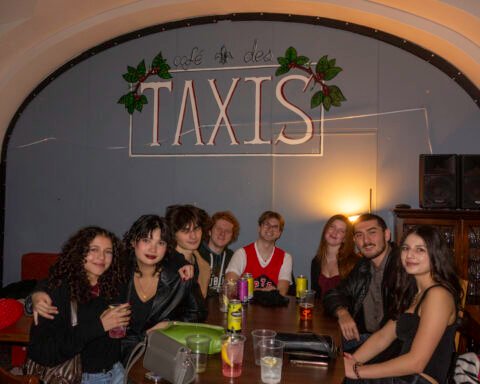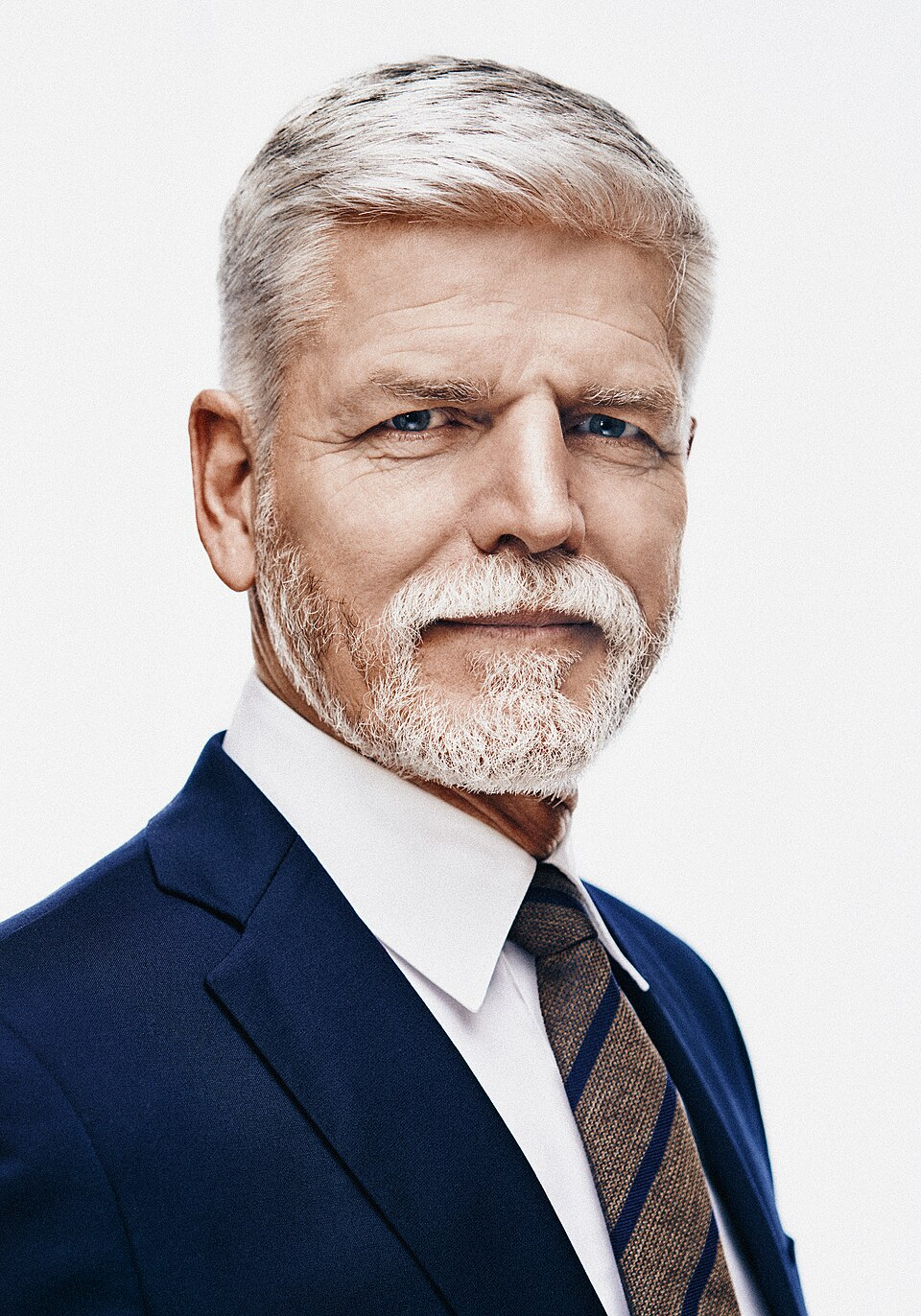

Tens of thousands of people filled Prague’s Old Town Square and Wenceslas Square last month in support of President Petr Pavel, while many Czech students at Anglo-American University watched closely and cheered them on.
The demonstrations came after Pavel refused to appoint Filip Turek as a minister, citing Turek’s past behavior, which included making a Nazi salute and sharing Nazi-related memorabilia. Turek described those actions as being in “poor taste rather than extremist intent.”
For many, the protests were not just about a political dispute in Prague Castle but about defending democratic values, resisting political pressure and standing behind a president that they believe represents stability at home and credibility abroad.
“I think it was important that people showed up,” Czech first-year journalism student Adam Schupak said. “Even if the Constitution isn’t crystal clear about whether the president can reject a ministerial nominee, he has a moral responsibility. If someone has a past connected to extremist symbolism, that matters. You can’t just ignore that for political convenience.”
According to Pavel, Foreign Minister Petr Macinka sent messages warning of unspecified “consequences” if the president continued blocking the appointment. Pavel later made those messages public. For many demonstrators, the issue was no longer just about one nominee, but about what they saw as pressure directed at the head of state for upholding his position.
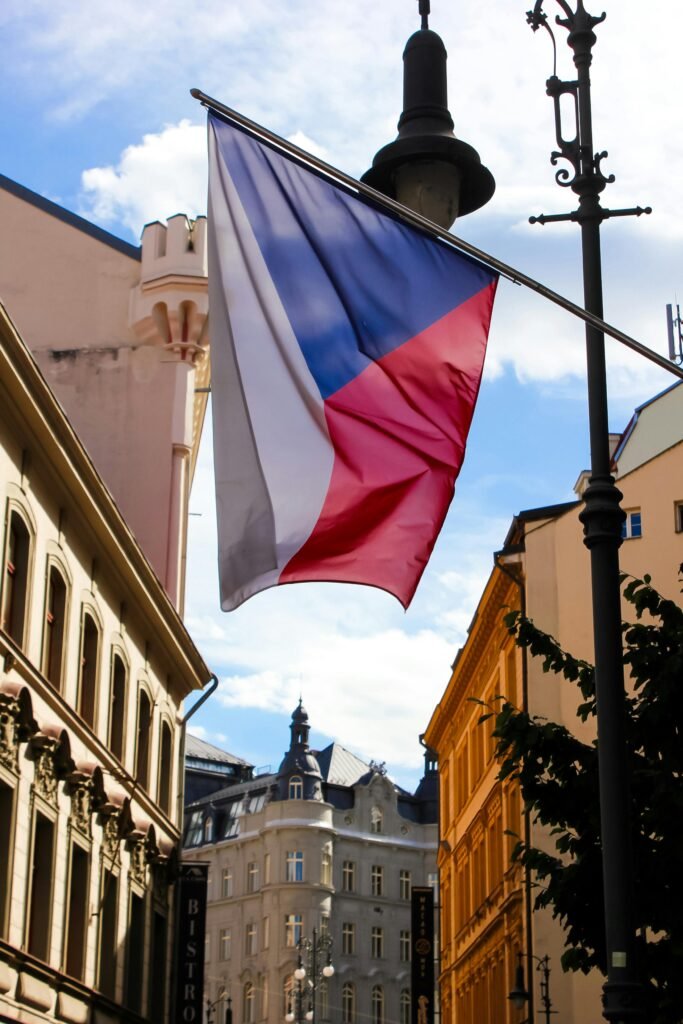
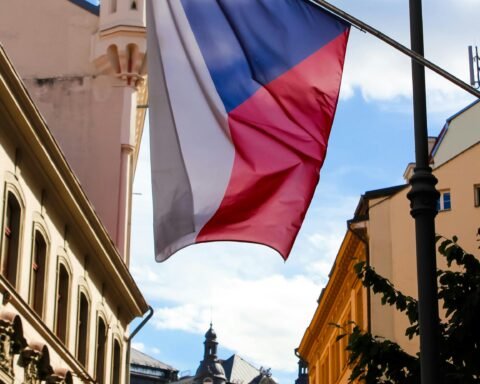
Organizers estimated that between 80,000 and 90,000 people attended the Prague protests, waving Czech and European Union flags and holding signs reading, “We stand with the president.” The atmosphere mixed determination with celebration, as chants echoed through the city center and speakers framed the moment as a test of democratic resilience.
Schupak acknowledged that some older Czech people remain skeptical of Pavel due to his past ties to the communist-era secret police force STB and his military career during communism. However, he believes the president has proven himself since taking office.
“People bring up his past, and that’s fair to discuss,” Schupak said. “But what matters is how he acts now. In this case, he showed he’s willing to stand up to political pressure especially from a party that only won around six percent of the vote but is trying to exert major influence in the coalition;that sends a message about principles.”
Ema Kalafutova, a first-year Czech student studying International and European Legal Studies, said her support for Pavel began during the presidential election and has only strengthened.
“I voted for him because I was tired of scandals and populism in Czech politics,” Kalafutova said. “What I appreciate most is his calm, factual way of communicating. He doesn’t escalate. He explains. Internationally, he represents the Czech Republic with professionalism and dignity.”
Kalafutova, who follows European politics closely, said Pavel’s background in NATO gives him credibility at a time when security concerns in Europe remain high.
“The protests felt powerful and unifying,” she added. “They showed that a large part of Czech society does not want extremism, political pressure or hate symbolism to become normalized. For me, it was reassuring to see that.”
Julie Ostrvilova, a first-year Czech student in International and European Legal Studies, described Pavel as “a truly good president.”
“He is a symbol of democracy,” Ostrvilova said. “His actions are fair, predictable and beneficial for the Czech Republic. When he refused to appoint the nominee and published the messages that suggested pressure or even blackmail, he showed transparency. That builds trust.”
Ostrvilova said she believes appointing a minister with a controversial past could have damaged the country’s democratic stability and international reputation.
“With leadership like this, I feel calmer and more secure living in a democratic system,” she said. “Compared to the previous administration, which often felt unpredictable and self-serving, this feels stable. It feels responsible.”
The broader dispute has deepened tensions between Pavel, a vocal supporter of the European Union and Ukraine, and Prime Minister Andrej Babiš’s coalition government. For the students interviewed at AAU, the conflict is about more than coalition politics.
Together, their perspectives reflect a broader sentiment among many young Czechs: a renewed sense of confidence in the country’s leadership and its direction, both domestically and internationally.
For them, the crowds in the square were not simply protesting a nomination; they were signaling what kind of democracy they want and who they believe should defend it.