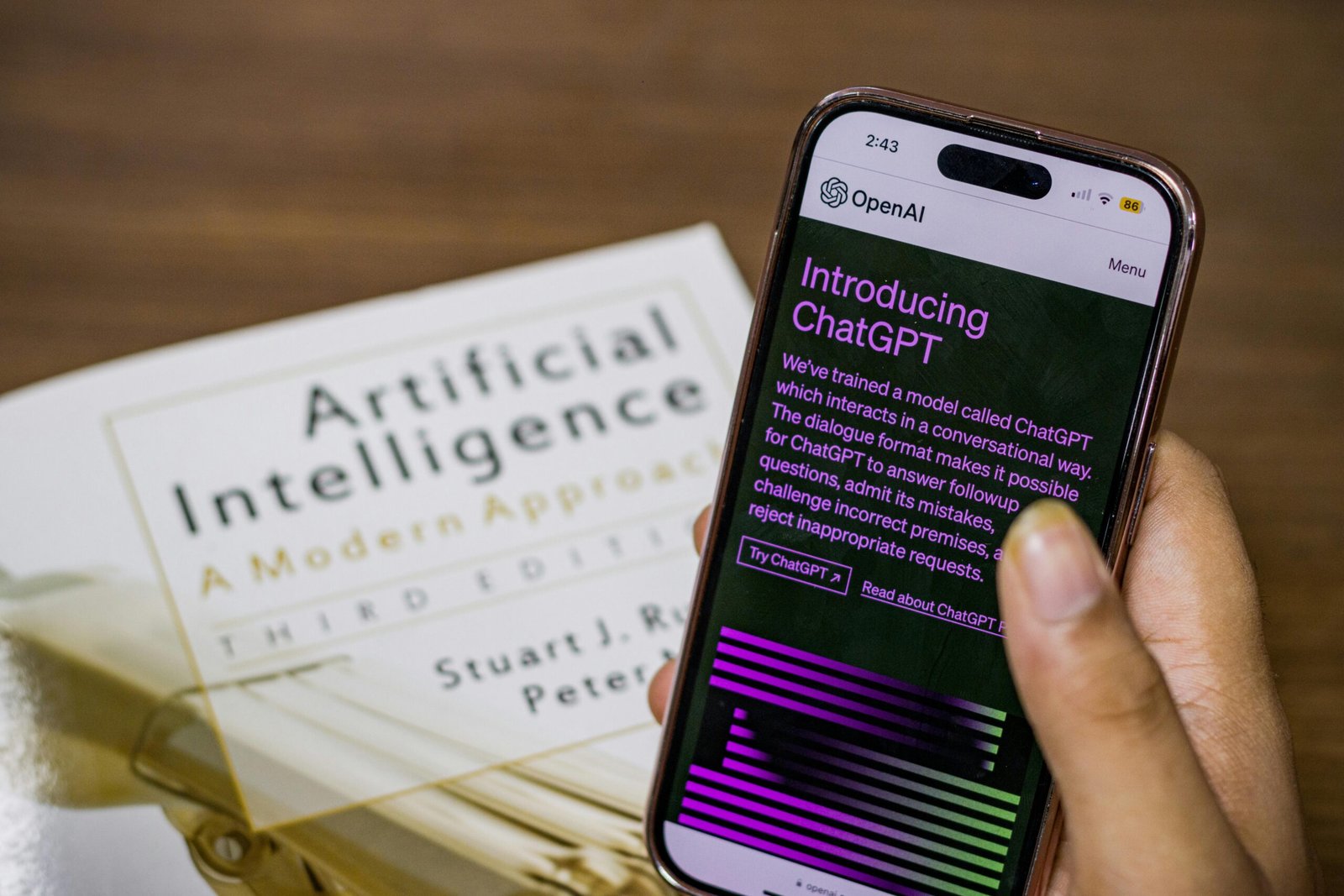

As AI usage becomes increasingly widespread in both personal and professional settings, AAU is planning to offer a concentration for students interested in the intricacies of Artificial Intelligence.
Discussions surrounding the course began in the fall and active development began during this semester. Business school dean, Jiří Schwarz has been involved in discussions around developing and planning the course, and explains the motivations behind AAU’s response to these trends.
“We felt like we should try to react to these changes, because we strongly believe that having the knowledge and the skills is something that would be useful to be successful in the labor market in the future,” Schwarz said.
With many attitude variations among both student and faculty regarding AI use in academic settings, participation in the new concentration is uncertain. However, offering an expanded catalog of courses on the topic, Schwarz says, would at least give students the opportunity to expand their perspectives. This decision will come after discussions with AAU’s stakeholders to receive their input.
“From our discussions with students, we know that many students dislike the idea of AI altogether, so we are not sure about the actual demand for such a program,” Schwarz said. “But we feel that as a smaller private university we should try and react to new trends, so we should at least have an offering.”
In its current concept, the concentration would consist of seven different courses, five of which would remain the same regardless of program, and the additional two to be specifically applicable to other existing programs. These program specific courses are still in the process of being finalized.
If all stays on schedule, the school’s goal is to begin offering courses in the coming fall 2026 semester while the full concentration undergoes internal approval, but this is yet to be definitively confirmed.
Jeff Medeiros, who teaches Computer Information Systems, says he strongly supports such a program being instituted, and personally believes that there should be a mandatory element instituted to educate students on AI.
“It’s great that the school is taking some proactive initiative, and separately beyond the concentration, my belief is that there should be a requirement, maybe not an entire semester course but at least some seminar,” Medeiros said.
However, as of now, Schwarz assures that the school will not pressure students to participate in these courses.
“No one should take it as us pushing or forcing students to study AI, and that’s also why we designed it as a separate concentration,” Schwarz said. “It’s an offer, and whether or how we would use or change our attitudes is separate from this, and it should be the outcome of the discussions that we’ve had with the stakeholders.”
Beyond just using these courses to educate students on the ins and outs of using AI and how it can be translated into the workplace, the courses would also offer insight into the ethical, philosophical and social implications of the issue, not just developing skills.
“It’s not just about how to use it, but also how to understand its limitations, or long run consequences of using it, so it’s broader,” Schwarz said. “As with everything we’re doing here we always try to provide context for the whole topic.”
As an AI component has recently been added to the Computer Information Systems course, Medeiros describes what he has heard in conversations with students in regards to their opinions on AI, which he reports as being partial to negative outlooks.
“It was a good chunk of students who said they weren’t buying, and that can start from meaning they use it only sparingly to they don’t use it at all,” Medeiros said. “Probably most of them might use it a little bit for editing and catching grammatical errors and things like that, but aren’t really using it to research or understand something deeply. I think that’s generally the attitude of a large percentage of the class.”
Medeiros agrees that educating students on the broader components of the topic is not just an important piece to include in such a course, but a critical one for students to be informed about.
“It’s not just about how do I use AI or what is AI, on a more important level it’s these ethical and moral concerns. What are the ramifications of using or not using it?” Medeiros said.
A recent Gallup study found that over half of all U.S. college students (57 percent) report using AI in their coursework at least weekly, and similar studies over the past couple of years illustrate consistent trends globally.