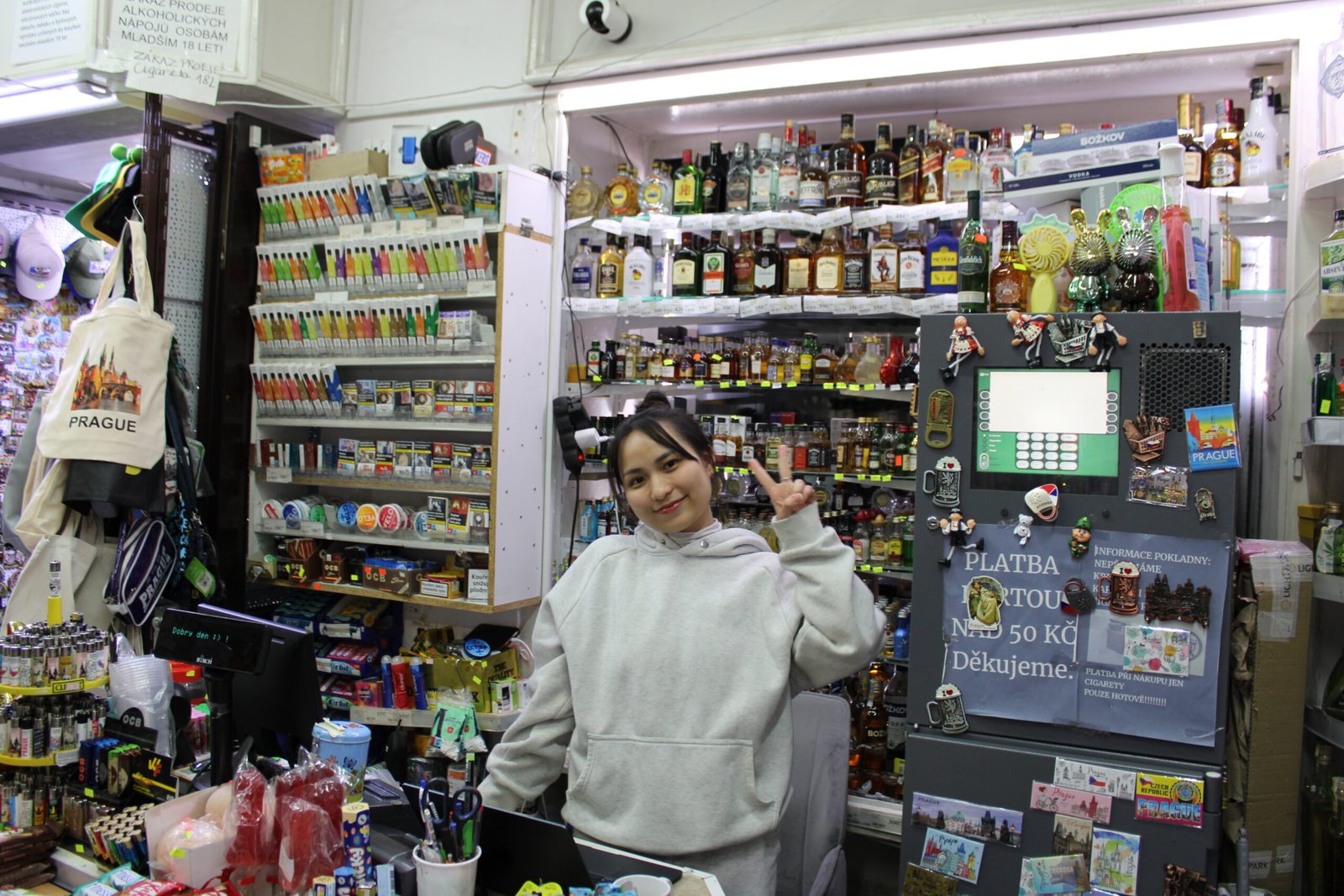

I’ve been friends with Nguyen Thi Huyen Trang since I moved to an apartment across the street from the convenience store she works at. Trang and I would see each other almost every day as she sat behind the counter playing clash royale between school assignments. We would laugh at ourselves, both of us procrastinating our university work, and a friendship quickly blossomed.
We have a lot in common. We both moved to the Czech Republic around the same time, Trang at age 20 and me at 18 both, leaving everyone and everything we knew. Although the events that led us to live in the Czech Republic were very different, we still found solace in coming across oceans to live in this foreign place. Outside of the convenience store I only get to see Trang when we go to Church together, a rare break she gets from her busy university and work-filled life.
We sat cozied up behind the counter together, warm under the pink blanket she got from Vietnam. “Made in China” she laughed.
Trang pulls up a coca-cola crate for me to sit on and ritualistically offers me the last of her strawberry gummies, that I’ll pretend I won’t eat and she’ll keep reminding me to until they’re gone.
Trang grew up in a small village in what she describes as the “grassy” Nghe An province four hours south of Vietnam’s capital Hanoi. Her parents worked on a rice farm near her home. She grew up comfortably, eating good Vietnamese staples, like Thịt Kho Tàu and Canh Bí Đỏ (braised meat with eggs, and pumpkin soup), that now I get to try, thanks to her mother who taught Trang how to cook so well.
She tells me most people in her town aren’t rich, but she misses the generosity and community. With help from the Vietnamese community in Prague, Trang has been able to navigate the struggles of being a young foreigner. The first day Trang arrived her classmate from Vietnam let her stay rent free while she searched for employment. Trang’s bosses who own the mini-market potraviny she works at have fronted her paychecks to help pay for tuition, never charging her interest.
“Come to Vietnam,” she urges me, “People let you stay in their homes while you travel, no one charges you anything, they will even cook for you!” I raise my eyebrow in disbelief at the concept foreign to my American mind. “Even though they’re not rich they’re always friendly, and they help everyone.”
After graduating high school Trang was accepted to study in the United States, but two weeks after receiving her visa her plans were turned on their head. Trang found out she was pregnant. Unable to live in the US, she wondered how to make ends meet for her young daughter. As the oldest of five siblings, she knew her parents would not be able to afford to send her to University and pay to support her daughter. Trang’s hopes of seeing the world began to feel more like a pipe dream than a reality.
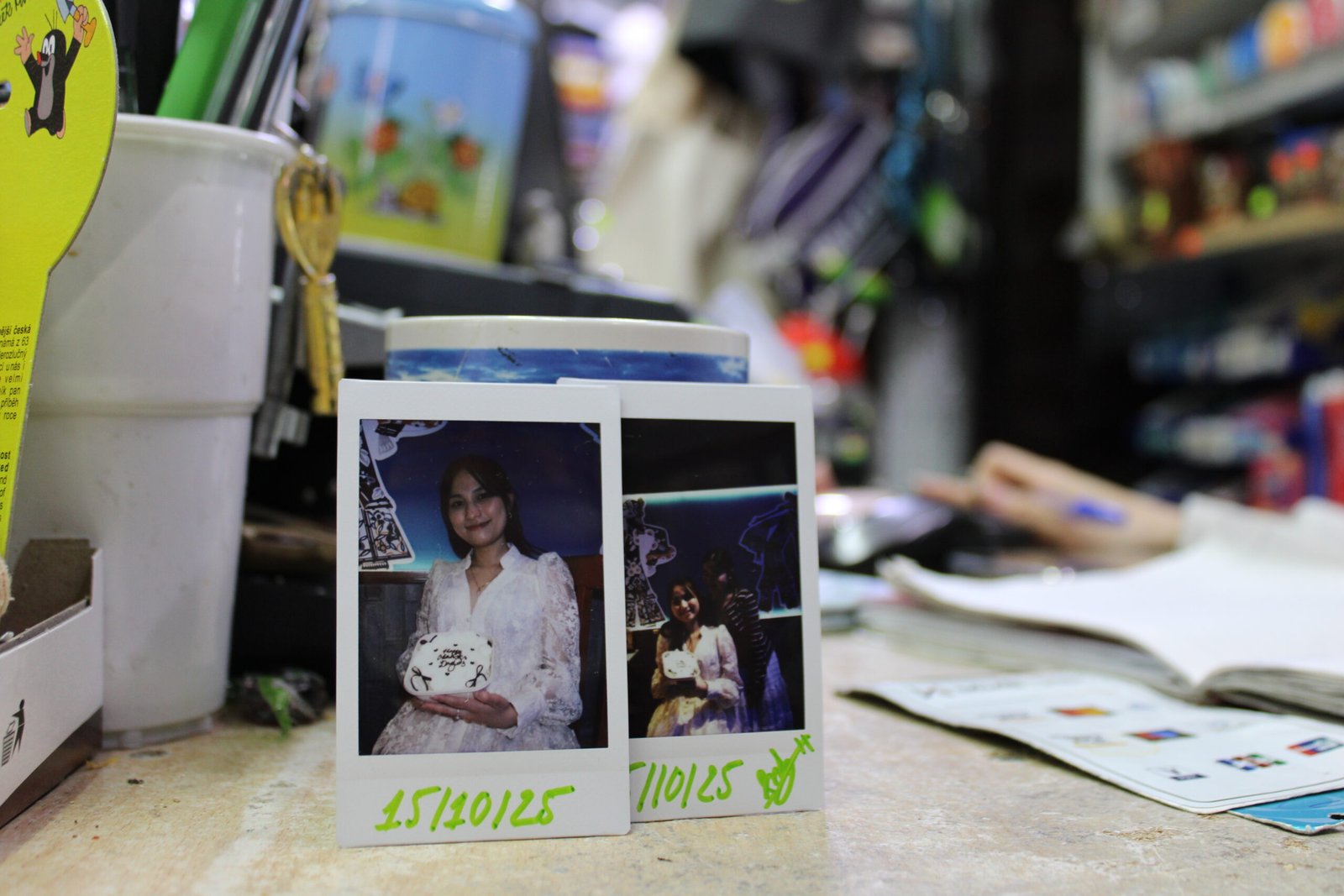
Shortly after her daughter turned one, a classmate from high school texted Trang that she had recently moved to Prague. “She told me how cheap it is to live, and that I can use my English to study,” Trang recalled.
Trang made the difficult decision to leave her family in Vietnam and pursue an education in hopes of a better future for herself and her daughter. But Trang takes comfort in knowing her daughter is being cared for by her and her husband’s parents.
Trang’s mother had her youngest son less than a year before Trang found out she was pregnant herself. Trang watches the toddlers play on cameras set up in her parents house.“Oh my God,” she laughs, her daughter watches Trang’s mother clean from atop the kitchen table, “She loves to sit on the table… not the chair… the table.”
Trang left for the Czech Republic in 2024 unable to take her daughter on a student visa, and with her newly-wed husband still waiting on his acceptance to study in Hungary, Trang was on her own. Linguistically she would be disconnected, only able to use her self-taught English to communicate.
“English courses are expensive in Vietnam,” Trang took it upon herself to learn by watching Netflix shows and listening to podcasts online. It wasn’t her intention to study in English, instead she tells me “A person should want to learn more than one language to-” she pauses to look up the word “–integrate, with different environments. I love to learn languages, but I’m lazy right now,” she laughs.
Our conversation is interrupted by the chime of the store’s electric bell. A Chinese family walks in, “I had a Chinese classmate in Vietnam,” she leaned over to tell me. She smiles and says something in Mandarin to the little girl inspecting some magnets stuck to the humming safe next to us. We all laugh as the father quizzes Trang on the price of a Coke in Mandarin.
“I decided to learn English because Chinese is too hard,” Trang laughs after the family leaves the store. Yet another language she’s picked up on despite her ‘laziness’.
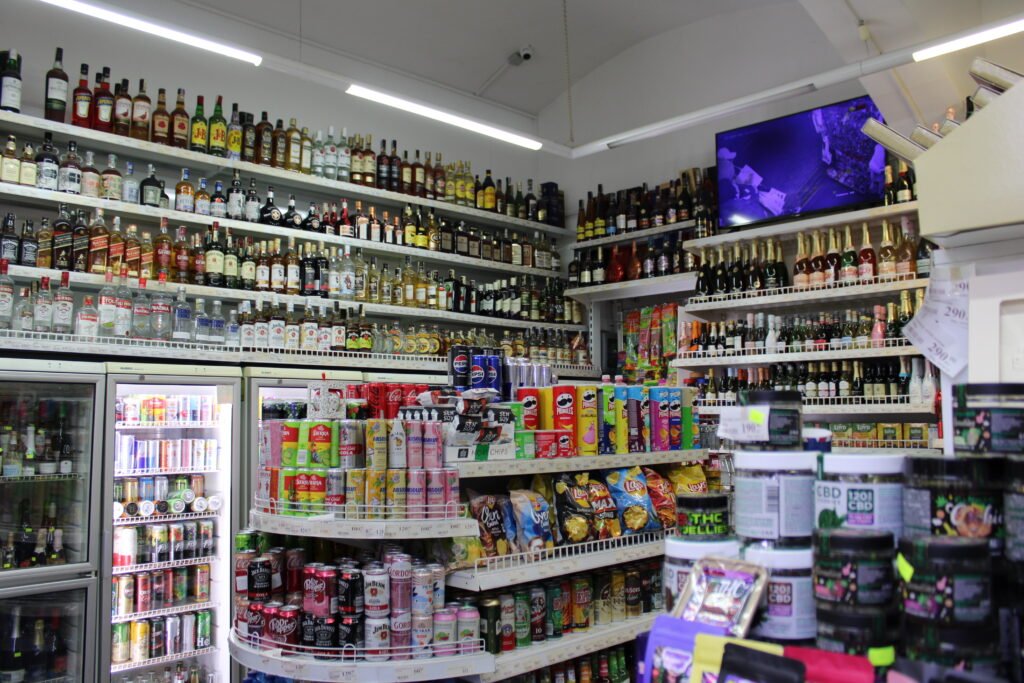
Although Trang is usually cheerful when I see her, working alone as a young woman has been anything but smooth sailing. The consequences for any theft fall on her, and she has to pay for any stolen merchandise. An expandable police baton sits at the corner of the counter, a safety measure her boss has given to her.
“Last week a man on drugs came in and stole two jars of weed. He ran away on bike, there was nothing I could do to stop him.” She recounts a time when a group of teenage boys came in trying to steal HHC gummies, “I told them to leave and put the stuff back, but they didn’t leave. One stood here,” she said standing up near the door, “He tried to push his friend onto me,but I moved too quickly and he pushed his friend to the floor,” she flung herself to the side, laughing, her finger pointed to the spot where he fell.
A couple days later they came back, this time for matches. “Nemám” one said defiantly when Trang told him the price. He proceeded to light the match in her face. “I chased them away,” But they didn’t learn their lesson and came back to the potraviny, again with another teenage boy trying to distract her and steal something. “I’m so angry but I know I do nothing, because they are under 18,” her shoulders shook with her head as she pushed the anger away.
“After, I told my boss I cannot handle it anymore. I’m so tired and stressed, I cannot struggle like this anymore.” Her boss searched the footage and sent her daughter the same age as the boys to look for them at school, and take it to the principal. Her daughter never found the boys but Trang’s boss began teaching Trang how to handle people and protect herself in inevitable situations.
I remember meeting her boss at Church a previous Sunday when Trang briefly introduced us. The young woman always stuck out to me in the crowd, dressed to the nines. “She’s like Wonder Woman” Trang told me, “You know when she was 8 months pregnant, she went after a customer trying to steal a carton of beers.” The man had come into the store and grabbed the carton but Trang’s boss chased him down and ripped it from him, “He broke two of her fingers,” Trang recounted. We both sat quiet for a minute, stunned by the notion. “But she didn’t drop the beer. I think Vietnamese girls… women, are so strong. We don’t fear anything.”
“It’s in the history,” her eyes light up as she tells me the stories that have stuck with her since her childhood classes. Four million Vietnamese women won titles of honor during Vietnam’s Resistance War against the US, according to the Comprehensive Party Documents from 1965. Women’s efforts during the war did not end with official military involvement, Trang told me, “When the men went to serve in the war, the women left behind protected their villages. Women and children fought off the enemy on their own.“ she told me with her head held high.
As a child Trang had respiratory problems, an issue that affects many children in Vietnam, she told me. She wants her daughter to grow up with her and her husband in the Czech Republic.
”It’s healthier for her here, less pollution, and she will study a lot of languages and interact with a lot of cultures.” But Trang intends to move back to Vietnam eventually, she wants to live in a big house with her in-laws and her parents, and maybe work as a teacher. ”I think I’d be suitable to be a teacher,” Trang tells me, laughing.
“Do you like kids?” I asked her, “No!” she responded quickly, “Because I have so many siblings, I know… I know,” and once again laughter filled the small store.
When I asked Trang to do a profile on her life she was confused, “Me? But I’m just a normal girl. I think Vietnamese people work hard, it’s not just me, it’s normal. Because we don’t live for ourselves we live for our family, our parents, our children. My family is my biggest motivation to work hard and try to do better. I’m not a hero, I’m not unique.”
But to her family she is a hero. One day her daughter will know the sacrifice her strong mama made for her.