
Last December, an exhibition at the Center for Architecture and City Planning (CAMP) told English speakers all they needed to know about the future of transport in the city of a hundred spires.
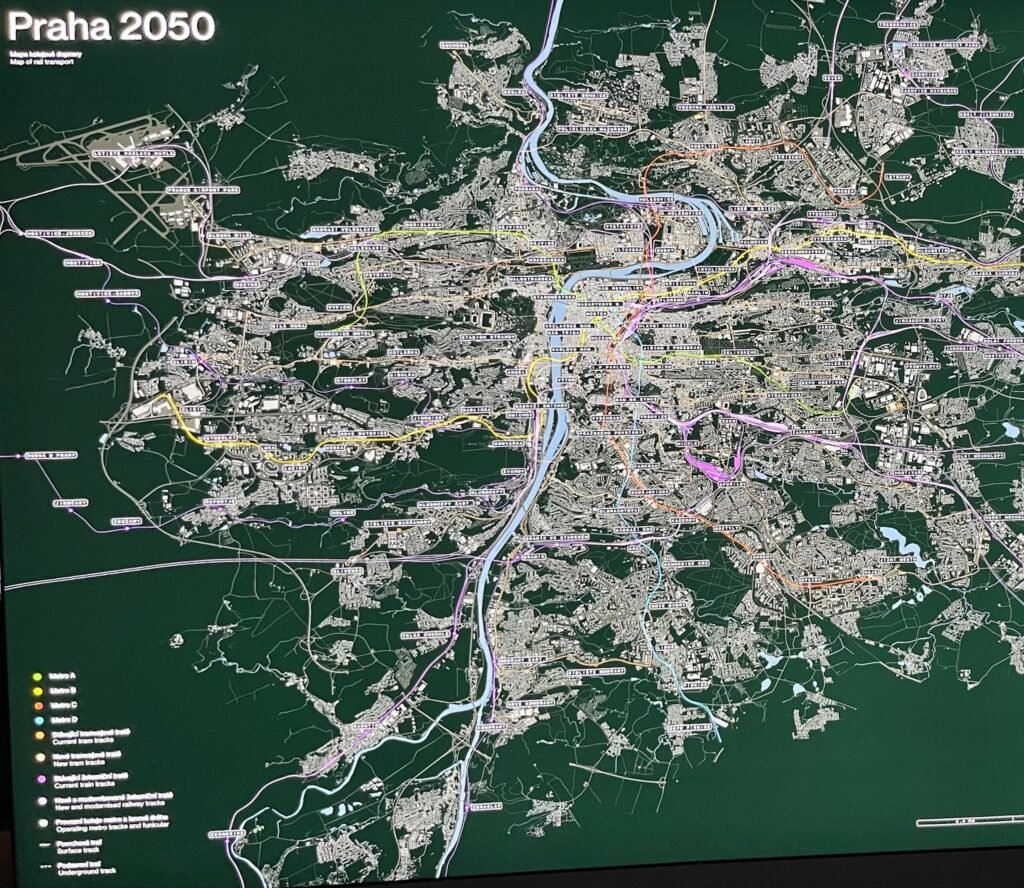
The Prague Tomorrow? Connected City exhibition was opened by expats.cz to English speakers on its last day, Dec. 9, with a free tour offered by Marek Zděradička. Featured was one large room with a large interactive projection showcasing the future development of Prague’s tram, metro, and train systems until 2050.
Additionally, there were stationary maps and illustrations demonstrating the exhibitors’ point that the city needs to expand public transport due to the growing population.
In the short term Praguers will mostly see the construction and opening of multiple tram line extensions to parts of the city such as Malešice in Prague 10 and Nové Dvory in Prague 4. Most notably, however, is the up-and-coming opening of the Dvorecký pedestrian-tram bridge in the South of the City in 2026.
This and other tram line extensions through 2035, such as to Jižní Město, will play a key role in the completion of a ring line around the outskirts of Prague by the 2040s.
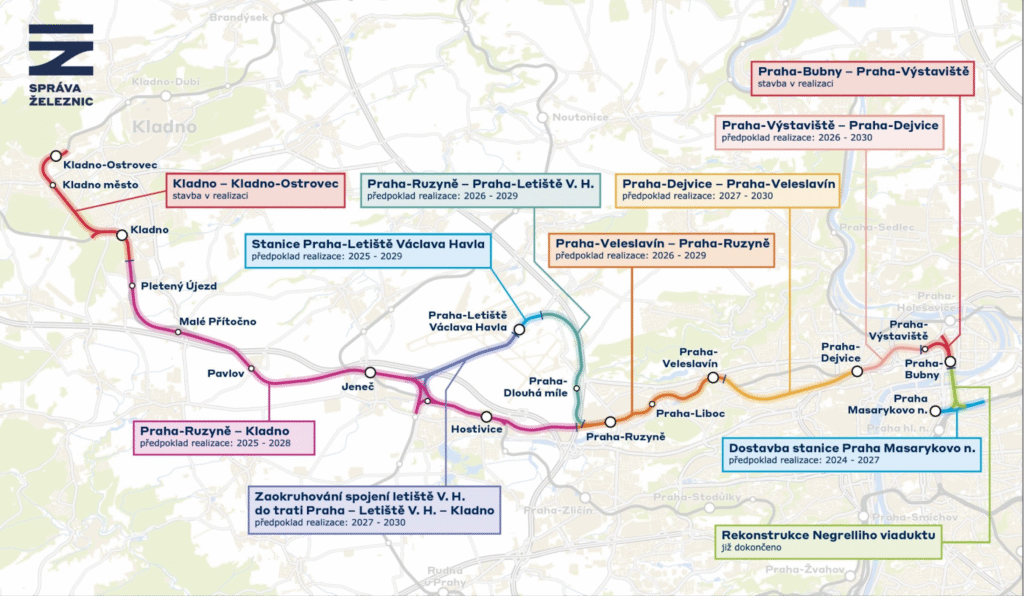
Many upgrades were highlighted that will be made to Prague’s commuter rail system, colloquially known as the Esko or “S” system.
Most notably the airport rail line project, part of which was realized this year with the opening of the new Bubny and Výstaviště stations. The project which will most likely be finished in the early 2030s.
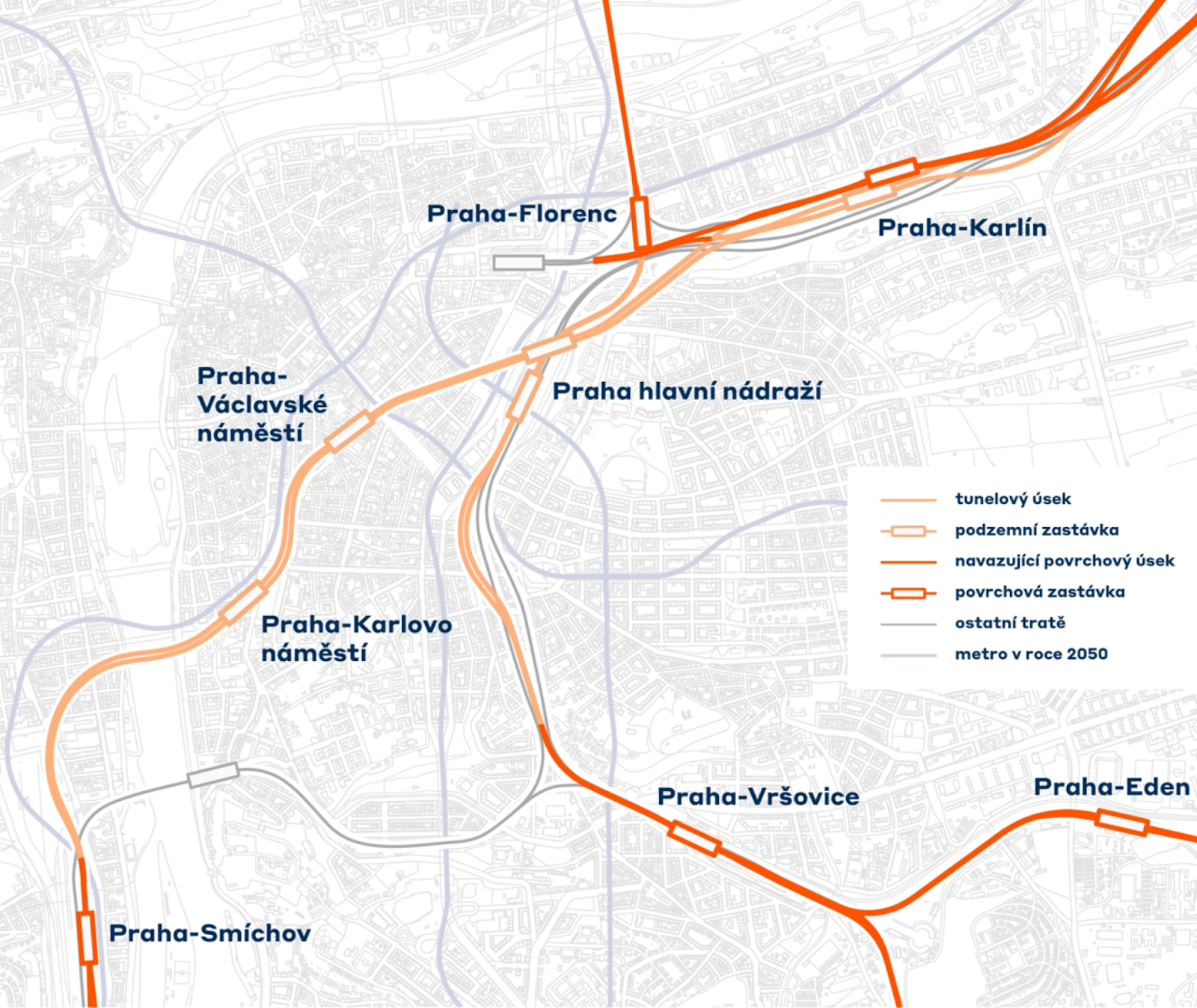
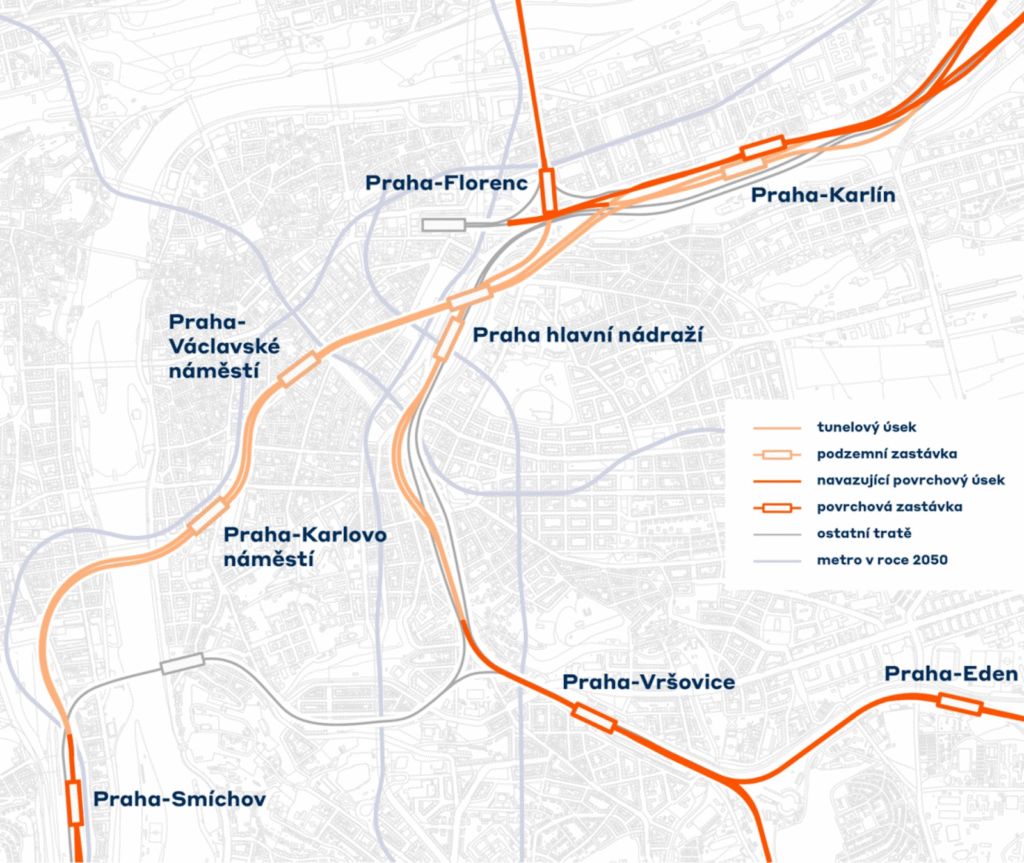
Another hot topic was the system of suburban train tunnels that are going to be built in the next 30 years underneath the city to allow room for high speed trains at the already at-capacity platforms in Prague Main Train station.
Prague’s upcoming Metro Line D (or “blue line”) is expected to be completed in the mid 2030s. The line will connect the southern parts of Prague, which have historically been underserved by public transport. This is a particularly important project, as the Southern part of the city (Prague 4 and Prague 12) will be experiencing rapid growth in the near future due to the construction of the D3 motorway from the southern part of Czechia.
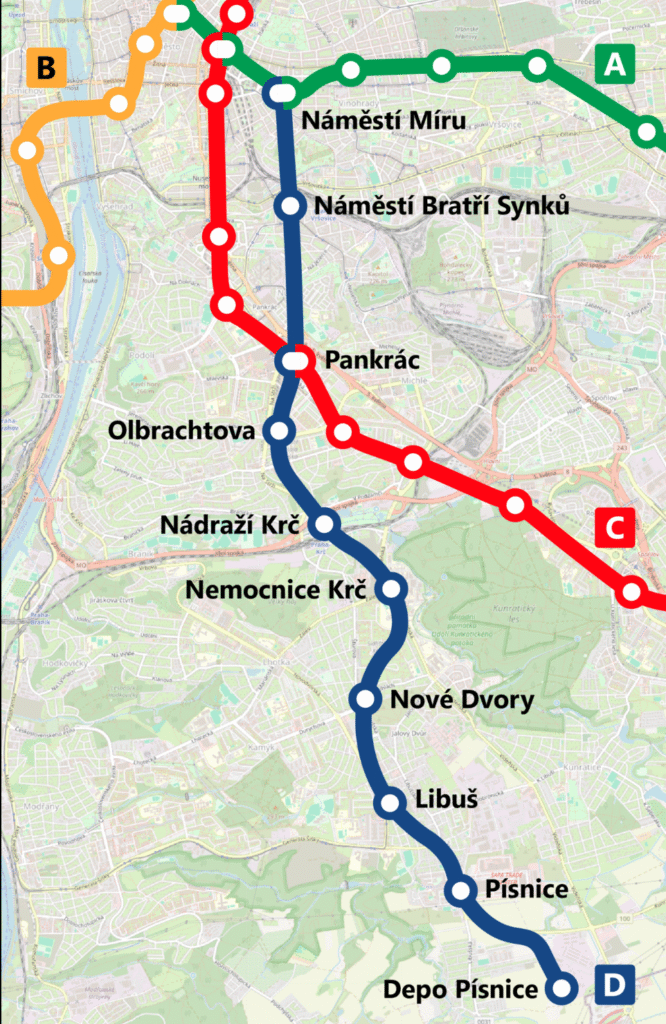
By 2050, Line D will be extended from its original terminus at Náměsti Miru on Line A to the Main Train station and Náměstí Republiky metro stops to connect it with all three existing metro lines in the city.
These were most of the major projects that were discussed at the exhibition, which is now closed. Depending on how Prague’s transit projects pan out in the future, new housing opportunities may become available for AAU students in parts of the city that are currently considered unfavorable due to a lack of public transport.