
The past weeks have left Czechia scrambling to respond to the outbreak of the US.-Israel and Iran conflict in the Middle East, resulting in thousands of evacuated Czechs and a sharp rise in energy prices.
With the U.S-Israel conflict with Iran sparking closure of multiple airspaces, around 3000 Czech nationals remain stranded in the Middle East as last week, according to Dobrovolné registrace občanů České republiky při cestách do zahraničí (DROZD).
On Mar. 9, the Czech Ministry of Foreign Affairs stated in a post on X that the government had “already facilitated 10 repatriation flights and helped return home more than 1,500 Czechs stranded in the Middle East.”
On Mar. 1 and Mar. 2, Czech Prime Minister Andrej Babiš convened the National Security Council to discuss the implications of the conflict. The main concerns raised were the repatriation of Czech people stuck in the Middle East, securing Czechia’s energy security amid rising prices due to the conflict and the general posture of the nation towards the United States.
The first repatriation flights landed in Prague’s Vaclav Havel Airport from Muscat, Oman two weeks ago.
The Czech government is sending their military aircraft to Jordan, Oman, and Egypt. On Mar. 4, Babiš also announced that Emirates would be launching daily flights from Dubai to Prague to repatriate stranded Czechs.
Prior to the outbreak of the latest conflict, the Middle East — Egypt, Oman, and the UAE in particular — had been growing in popularity as package holiday destinations, with Dubai in particular seeing multiple flights per day from Prague.
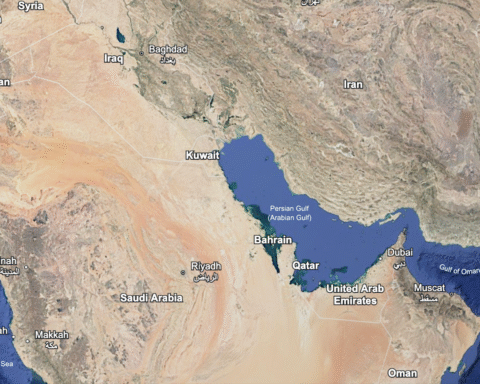
Another point of concern for the Czech government are oil and energy prices, which have already begun to rise due to Iran attempting to block and “fire on any ship trying to pass” through the Strait of Hormuz. Over 20 percent of the world’s oil and natural gas pass through the strait.
The Czech government seeks to avoid the sharp rise in energy prices seen after the Russian invasion of Ukraine in 2022, especially considering that this was one of the campaign points of Babiš and his ANO party.
On Monday, Babiš said that Čepro — Czechia’s main oil supplier and holder of built up oil reserves — had bought “fuel on the exchange a month in advance” in case of a prolonged conflict in the Middle East.
Czechia is a major exporter of products to Israel, with trade between the two nations exceeding $1 billion.
The strong relationship between the two countries dates back to the first Czechoslovak Republic. This has been reflected in the numerous visits between Czech and Israeli diplomats. Most recently last November .
In general, most of the Czech government, including members of the current coalition’s opposition in Parliament, are in agreement with the U.S.-Israel consensus on Iran. They support regime change and agree that an Iranian nuclear program is dangerous to Czech and European sovereignty.