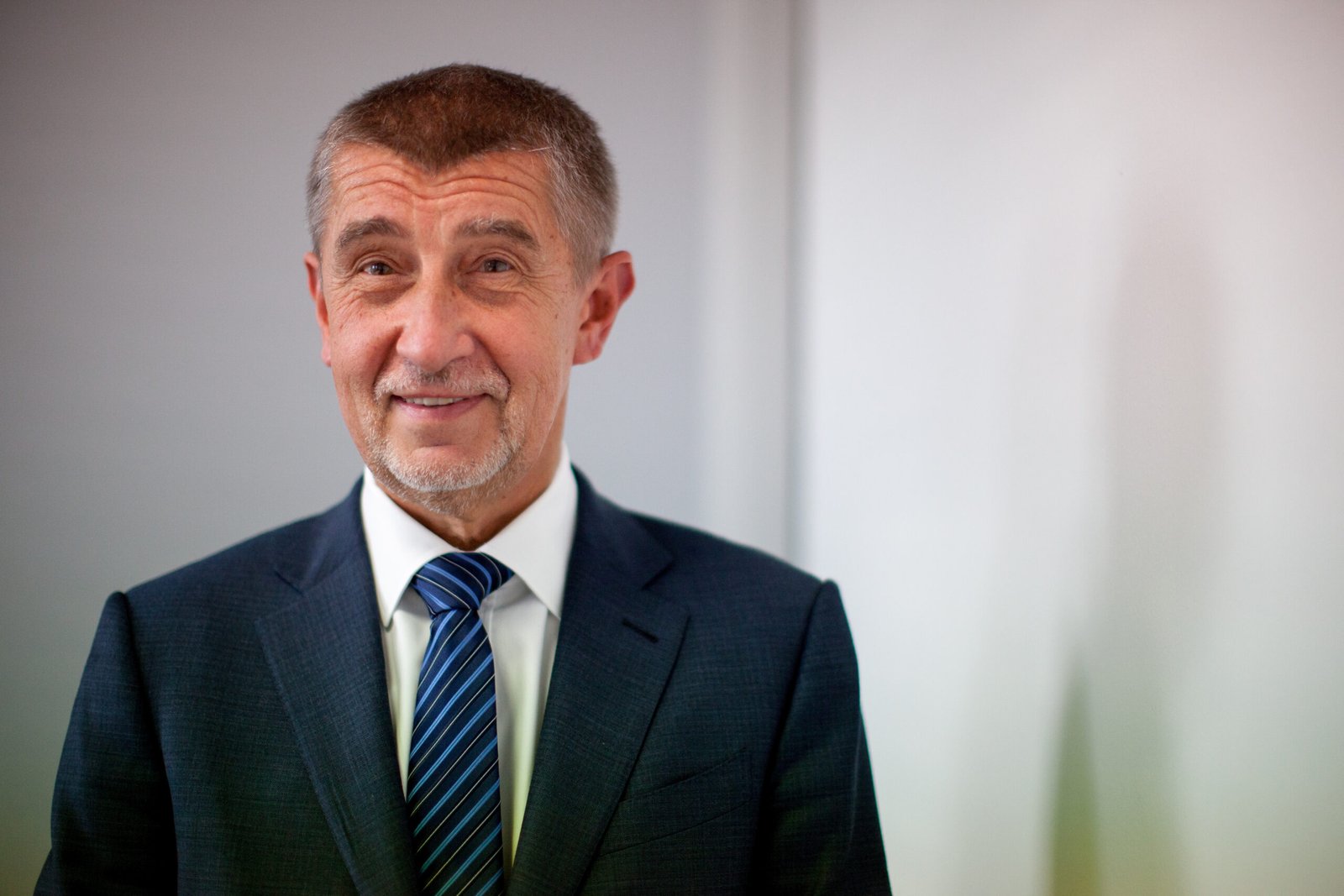

Four months have passed since the 2025 Czech parliamentary elections returned Andrej Babiš and his ANO (“Yes”) party to power.
Now governing in coalition with the far-right SPD (Freedom and Direct Democracy) and Motorist parties, his administration faces mounting questions about how it will shape life in Czechia over the next four years.
Babiš has frequently been compared by international media, including The New York Times, to U.S. President Donald Trump due to his billionaire background and populist political style. The Czech politician has ties to many chemical and food processing companies, including sole-ownership of Agrofert, a $10 billion conglomerate that dominates multiple industries within Czechia.
In 2019, Babiš tried to popularize his own version of MAGA caps, with the politician unveiling red baseball caps saying “Silné Česko (“Strong Czechia”). Since then, the politician has worn his red hat on several occasions, making clear that he is a fond admirer of Trumpian politics.
Until recently, Babiš also owned several major Czech news outlets, including Mladá fronta (“Youth front”), iDNES.cz, and Radio Impuls, the country’s most listened to radio station. He was forced to divest from these organizations after the Czech Parliament passed legislation banning politicians from owning media outlets for concerns over conflict of interest in 2023.
So how did Babiš enter politics in the first place? He is the founder of ANO (“Yes”), a political movement which he still heads to this day, and which propelled him to power in 2013 in the Czech Parliamentary Elections.
A year later, ANO entered the European Parliament and the cabinet of Prime Minister Bohuslav Sobotká, with Babiš becoming the First Deputy Prime Minister. Babiš would go on to become Prime Minister of Czechia in 2017 before being voted out of office in 2021 by a slim margin.
During his time dominating Czech politics, Babiš was involved in many high profile controversies and scandals related to his business dealings and tax history. Most notably the Storks’ Nest Affair which led to a political crisis in 2018, and more recent discussions of a conflict of interest involving Agrofert. The latter political situation is still ongoing as of February 2026.
Since the forming and confirmation of Babiš’s coalition featuring ANO, the SPD and Motorist parties in December and January, there have been multiple controversies plaguing the new government besides Babiš himself.
The biggest of which is the implosion of relations between Minister of Foreign Affairs Petr Macinka, a member of the Motorist party, and the Czech president Petr Pavel. For approximately a month, Macinka and Babiš had been pushing president Pavel to appoint Filip Turek of the Motorist party to the position of minister of the environment. This was in spite of Pavel repeatedly rejecting the request due to Turek’s “lack of regard for Czech law”.
The past few weeks have seen the matter turn into a massive political crisis when, at the end of January, Macinka cut off all communication with president Pavel, only communicating through the Czech president’s aides.
On January 27, Macinka sent a string of threatening messages, which were later published, to one of Pavel’s presidential aides. The Czech president considered the messages an attempt at blackmail and subsequently considered levying criminal charges against the foreign minister.
In the week that followed, Prime Minister Babiš moved to defuse the situation, stating that Macinka’s messages were “poorly worded” and that he understood the frustration of the Motorist party in trying to get Turek appointed.
In response to the breakdown in relations between the president and the foreign minister, thousands in Prague came out to protest Babiš’s coalition and foreign minister Macinka’s actions, rallying in support for President Pavel.
The demonstrations also highlighted wider anxieties about the direction of the governing coalition and the rhetoric of their political allies.
ANO is labelled by many as a European populist party. Specifically, rhetoric from members of the coalition concerning immigration and the EU has concerned many.
Additionally, the licensing fees that fund Czech Television and Czech Radio, the national television and radio stations, have been cut.
At the end of January, foreign minister Macinka refused to let a Czech journalist into one of the press conferences at the foreign ministry. Such actions signal that the press may be under threat by the new government.
In a similar manner to Donald Trump and his Republican party in the United States, Babiš’s coalition is almost certainly going to attempt to tighten visa requirements for foreign nationals of certain nations in line with SPD and Motorist party stances.
This could make it even more difficult for international students to obtain student visas in the Czech Republic.
The Babiš government claims to be willing to cut support for Ukraine, deny or underplay the importance of climate change, and reduce government spending.
Despite this, Babiš has refused to cut initiatives related to the support of Ukraine in its ongoing fight against Russia so far.
One of the criticisms of ANO and other right leaning parties in the 2025 parliamentary elections was that the previous government under Petr Fiala was spending too much. Despite this criticism, the new government budget passed at the end of January shows that the 2026 budget will have a deficit more than previous years under Petr Fiala’s government.
Currently, there is a deficit of almost 20 billion CZK more than the previous government’s last budget.
The Babiš government holds a slim majority in Czech Parliament, with 108 out of 200 seats comprising the ruling coalition. Just one month after his government received the vote of confidence to begin their mandate, a vote of no-confidence was conducted by the opposition, which Babiš’s government survived by just 17 votes.
Given Babiš’s political history and the far-right parties in his coalition, the next four years could prove politically turbulent for Czechia.