While acknowledging that dystopian fantasies are becoming a reality, society sits still watching from the sidelines. Daniel Pešta’s exhibition Who? Why? breaks that stillness, confronting viewers with their own inaction through provocative installations, paintings and assemblages at Museum Montanelli. Running until Mar. 29, it’s an exhibition that refuses escapism and instead exposes reality at its bleakest.
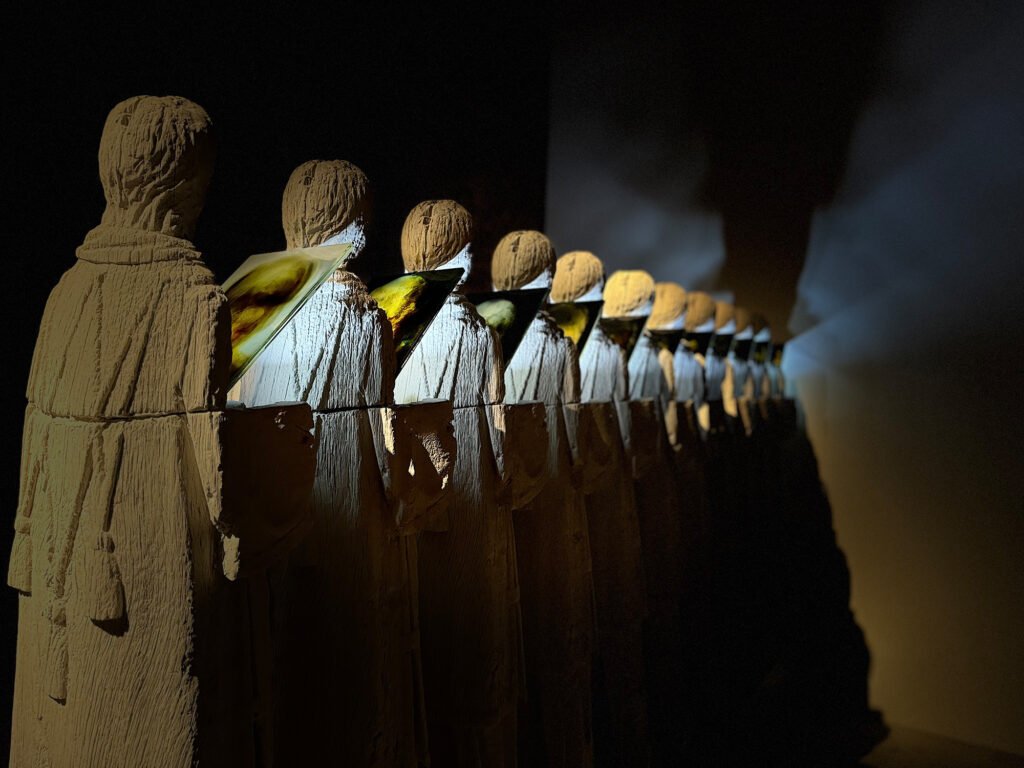
Like animals trapped in a cage one sculpture clings to the walls. A line of ten people stands, their faces transformed by projections of wild creatures. The sculpture leaves little space to walk around it, allowing it to dominate the room and overwhelm any sense of comfort. It feels suffocating and alive, perhaps haunted, with heavy air, dim lighting and shadows cascading wildly across the walls. It’s a space that unsettles, forcing the visitor to acknowledge the mask humans wear while internalising animalistic instincts. Without the constraints of morality or divine guidance, humans are capable of surrendering to primal impulses. Although conditioned to hide these instincts, society simultaneously pressures us toward hate, prejudice, and scapegoating, compelling us to confront the violent impulses inherited from our ancestors. In this way, the exhibition doesn’t just show our potential for cruelty; it makes the audience feel it within themselves.
“Often, the declared danger needs to be artificially created. Perfect for this purpose are minorities who are different in skin colour, religion, sexual orientation or just way of life,” Pešta said when explaining the background for the works, which were first exhibited in 2024 Something Is Wrong, at the Tana Art Space in Venice. .
Pešta, born in 1959, has long explored the intersection of politics and art. He began his artistic career under the communist regime in Czechoslovakia in the era of normalization, so the memory of life under totalitarian rule has remained etched in his work. From the start, he has challenged humanity to learn from history, confronting viewers with uncomfortable truths about power, control, and complicity. As society edges toward similar threats today, Pešta’s art resists collective amnesia, refusing to allow audiences to turn a blind eye to the erosion of democratic values. Pešta understands the ‘power of the powerless’ where meaningful change originates not from institutions, but from the people themselves, who must acknowledge both history and the instincts that continue to shape human behavior.
The Museum Montanelli space itself provokes as much unease as the artworks it contains. The rooms are dark, illuminated only by small lamps above each piece, reflecting the cold sterile nature of an abandoned clinic. The colours red and black are among the only visible, creating a dark, blood-themed gallery that only accentuates the worst side of humanity. The gallery is maze-like, and in a larger space, it would be easy to become disoriented. Each room is hidden from the next as if it were a zoo keeping the audience away from one another. The effect is confusing, claustrophobic, and intimidating. Every turn feels as though someone might be lurking just out of sight. It’s a chilling reminder that the viewer themselves feels alone and unprotected if they were ever to need it.
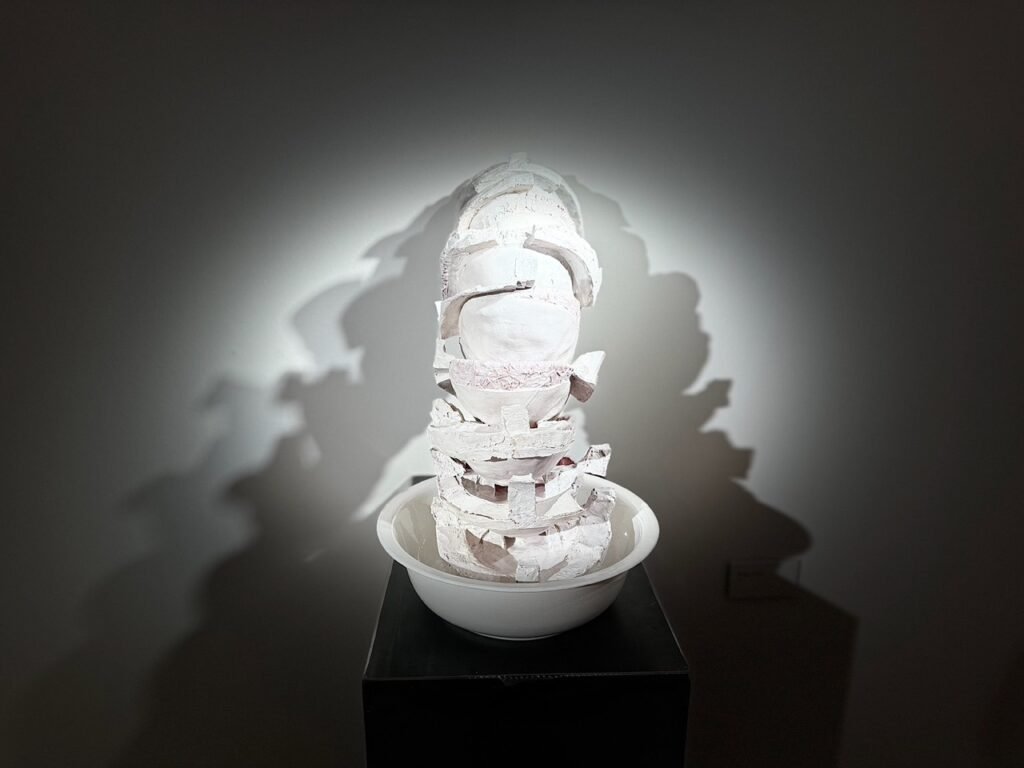
A lack of accountability sits at the core of Pešta’s art practice, and one of the most striking examples is his piece Execution, a cascade of white resin masks spilling downward like a waterfall. Each mask is blank, stripped of identity. Pešta frequently uses masks to expose how society hides from responsibility, and here they suggest a collective attempt to conceal the darker impulses within each individual. Each piece in this exhibition has a blank face. From blurred black and white photography so features cannot be distinguished to watercolours of figures without expression. The repetition is deliberate: the same blank face, the same emotionless surface, the same passive response as human rights abuses gradually become normalised.
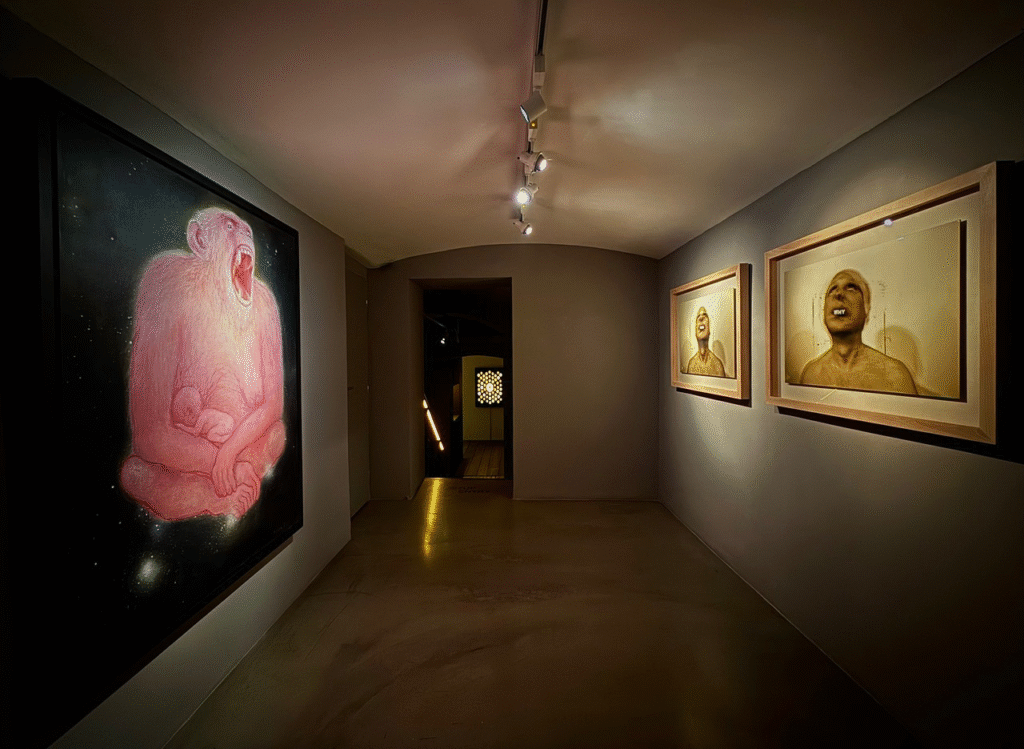
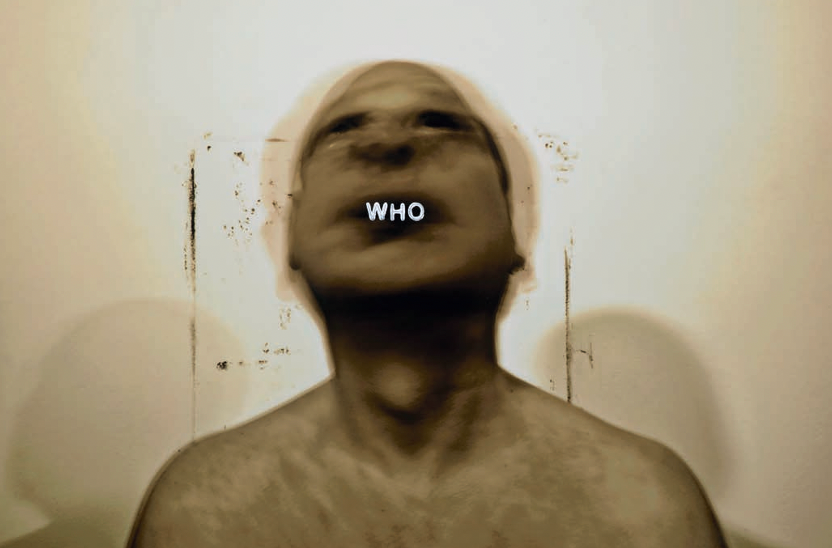
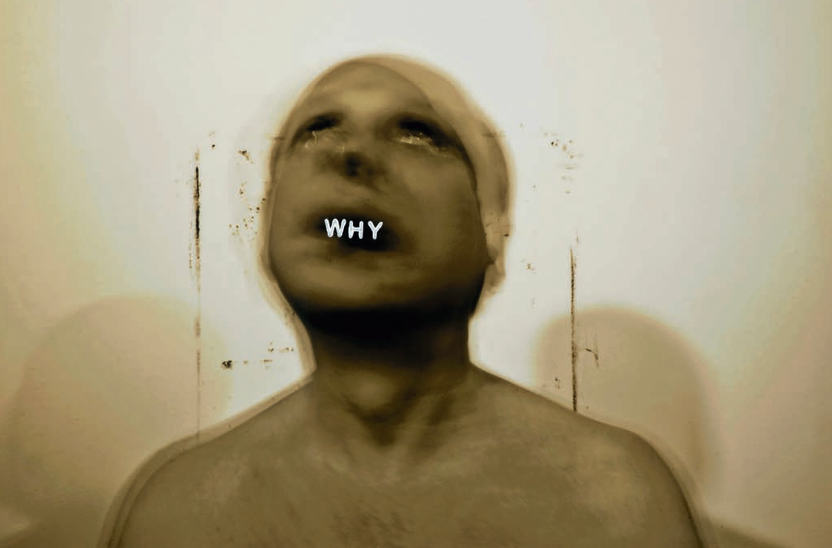
However, two large paintings of pink gorillas cuddling human infant babies dominate the entrance walls. The apes’ faces are not just visible but hypnotic. No masks are needed here; animals reveal their true selves openly, acting on impulse rather than disguising their nature beneath a more “evolved” exterior. Similarly, Pešta turns repeatedly to sculptures of God. Here, rather than the chaotic and brutalist style viewers have become accustomed to, the art becomes realist and stereotypically beautiful. A reminder that religion serves as a moral obligation where corruption of values begins when its teachings are forgotten. As the exhibition continues, it is as if Pešta is gripping the audience by the shoulders begging them to confront their own failures.
While immersive and socially engaged art has gained acceptance, Pešta’s work is still evidently extreme. His work has frequently pushed the boundaries of social critique allowing that rawness to infiltrate the viewers including DeTermination at DOX and I Was Born In Your Bed, in Litomysl, which confronted the persecution of Romani people in Czechia. Contemporary art invites artists to reflect on our ethical standards, yet it is rare to be confronted with our own naivety in such an extremely brutalist manner. The success of the disturbance Pešta is able to create is that he confronts viewers directly. This exhibition does not hide the fact that those viewing it are a part of the problem. The audience is not comforted and encouraged to scapegoat others as is so normalised in society. Rather it forces viewers to look at themselves with disgust.
After visiting, you are no longer a witness to the horrors of mankind but an active participant.